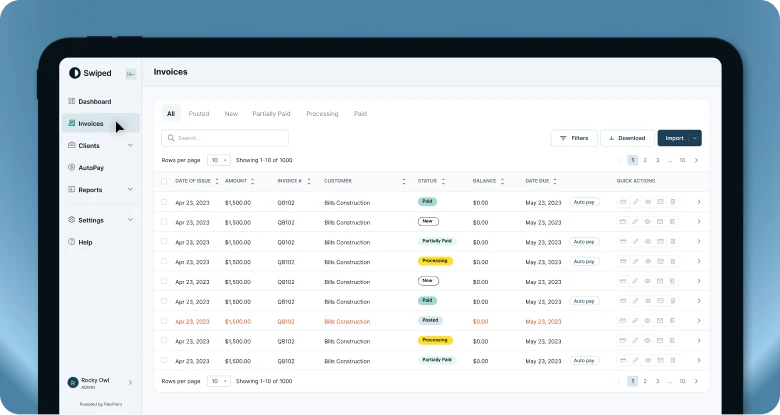



Running an MSP has never just been about solving technical problems.
The technical work is usually the easy part to recognize: a ticket comes in, an issue gets resolved, a project gets completed.
Then everyone moves on to the next thing.
The work surrounding those moments is harder to see.
Every week, your team spends hours chasing overdue invoices, documenting conversations, following up with clients, updating systems, reviewing aging reports, and searching through your PSA, accounting software, email, Teams, and internal notes just to understand what happened on a single account.
None of those tasks is especially difficult and most of them don't even require deep technical expertise.
The challenge is that repetition scales much faster than most MSP owners expect. Every new client doesn't just bring another invoice, they bring new payment history, another communication thread, another account to review, and another set of decisions that someone on your team has to make.
That's one of the biggest ways AI is changing MSP operations—by reducing the administrative work burying your back-office team's expertise.
The most growth-focused MSPs in 2026 won't necessarily have fewer people, but they will have fewer people spending hours every week on work that software is becoming remarkably good at handling.
Here are six back-office tasks that are increasingly suited to AI.
1. Hunting Down Payment Context
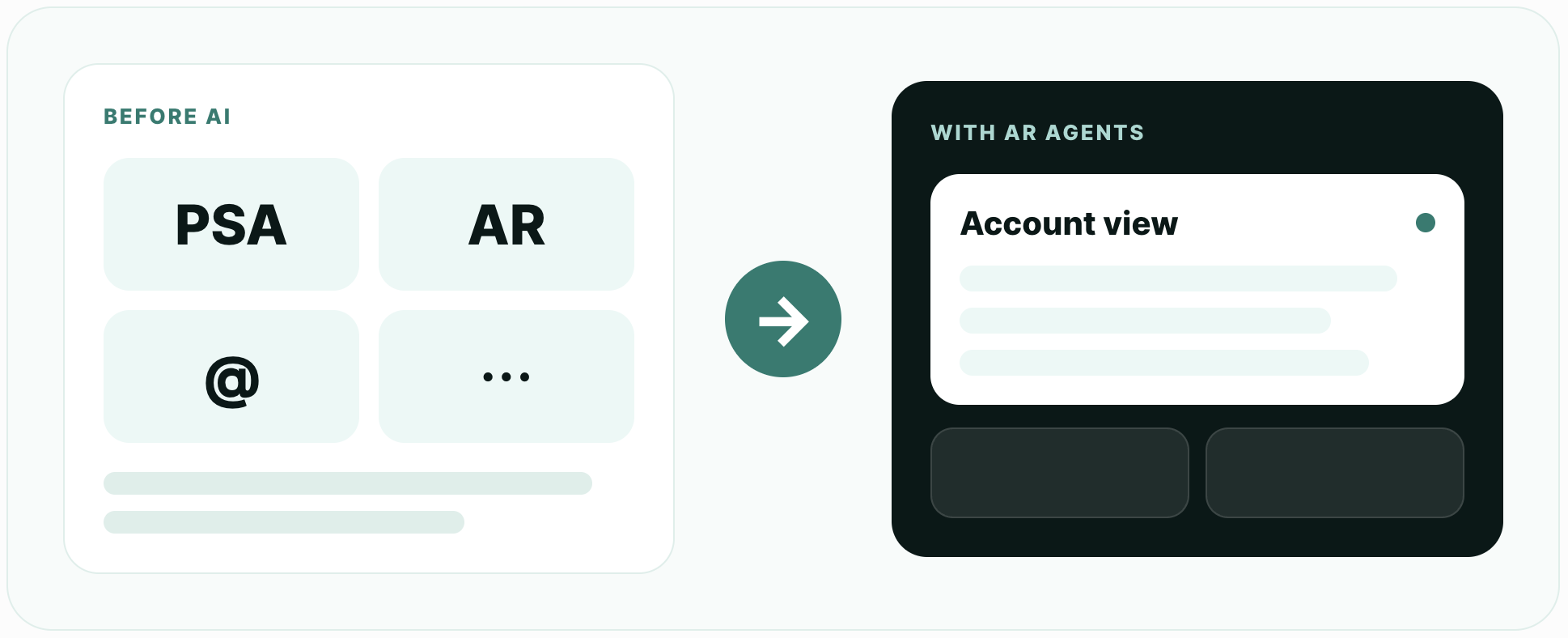
Following up on an overdue invoice doesn't actually start with writing an email.
As most back-office employees at at MSP know, it usually starts with opening four different applications.
Before anyone even reaches out to the client, they first have to answer a series of questions:
- Has the invoice already been paid?
- Did the client promise to pay next week?
- Has someone else on the team already spoken with them?
- Was there a billing dispute that changed the timeline?
- Have they always paid late, or is this unusual?
Individually, those questions take only a few seconds to answer.
Together, they become one of the biggest hidden costs in accounts receivable.
The information is often scattered across your accounting software, PSA, email, Teams, and internal notes.
Meaning that by the time someone feels confident enough to send a reminder armed with all the context they need, they've spent more time gathering context than actually communicating with the client.
Only 23% of AR teams say they're fully caught up on collections, meaning the vast majority are working from a backlog where every minute spent gathering context delays the next action.
That's where AI creates immediate value.
Instead of asking someone to assemble the story manually, purpose-built tools like FlexPoint AR Agents go a step further by pulling payment history, invoice status, previous conversations, and recommended next actions into a single Agent Command Center. Instead of switching between a handful of platforms, your team starts with the full picture already assembled.
If you're curious how that shift affects the customer experience, we covered it in more detail in What Happens to Client Relationships When AI Handles Your AR?
For a broader look at where AI is changing back-office operations beyond collections, see our guide to Back Office AI for MSPs.
2. Writing Every Payment Reminder Yourself
Most payment reminder emails look remarkably similar.
Yes, the invoice number and balance are different. And maybe the tone becomes slightly firmer depending on how long the invoice has been overdue or how well you know the client. But otherwise, you're communicating the same information over and over again.
Yet many MSPs still write those emails manually every week. (HubSpot found that 90% of customers rate an immediate response as important when they have a customer service question. While collections are different from support, the expectation for timely, clear communication doesn't change.)
It's understandable why. MSPs are more or less a relationship business on account of being a service related business.
Nobody wants an email to feel cold, robotic, or out of place. The last thing you want is an automated reminder landing in a client's inbox after they've already paid or while they're actively trying to resolve a billing question.
Those are valid concerns.
Fortunately, that's not what modern AI tools are designed to do.
Rather than blindly sending the same template to everyone, FlexPoint's Smart Invoice Follow-up follow-up is based on each account's history, balance, and relationship. You define the tone and schedule. The agent handles the repetitive follow-up, automatically pausing if the client replies or payment posts.
If you're still writing reminder emails manually, it's also worth optimizing the emails themselves. We put together over 50 invoice reminder subject lines that consistently improve open rates and make follow-up feel more professional.
3. Deciding Who Deserves Attention First
Most MSPs don't struggle because they don't know which invoices are overdue. Chances are good that you know exactly how much you are due right now.
But you may struggle because too many invoices are overdue at the same time.
An aging report doesn't tell you where to begin. It simply tells you who owes money. Someone on your team still has to decide which account deserves attention today, which client can probably wait until tomorrow, and which situation needs to be escalated immediately.
Those decisions become more difficult as your client base grows.
A client who has paid on time for three years probably deserves a different conversation than someone who has ignored reminders for the past sixty days. Likewise, a customer who promised to pay on Friday should be treated differently than one who hasn't responded in weeks.
That kind of prioritization requires context, and context takes time to gather manually.
Rather than presenting another static aging report, AR Agents recommend which accounts deserve attention first, surface the next best action, and keep everything waiting on human approval in one queue instead of scattered across multiple systems.
People still make the decision.
They simply begin with better information.
4. Making Collection Calls
Eventually, some invoices require more than another reminder email. Sometimes a phone call really is the fastest way to move things forward.
The problem isn't that collection calls don't work, it's that they don't scale particularly well.
Calling twenty overdue accounts can consume an entire afternoon, and there's no guarantee anyone will answer. Even when they do, someone still needs to document the conversation, update internal notes, and decide what happens next.
That's a significant investment of time for work that often follows the same pattern.
FlexPoint's AI Voice Calling is designed to extend your collections process. Calls only happen after email outreach based on thresholds you configure and every conversation is summarized automatically.
They can escalate only the situations that require a person—making your employee's lives easier and giving your clients that hands-on interaction that makes their overdue invoice actually feel serious.
That means your finance team spends less time dialing numbers.
They spend more time resolving the exceptions that actually benefit from a conversation.
If you're handling these conversations yourself, our guide on how to call about overdue invoices covers practical ways to approach those discussions without damaging client relationships.
5. Updating Internal Documentation
Everyone knows internal documentation is crucial to how your business operates.
But it's also one of the first things to get pushed aside during a busy week.
According to Microsoft, employees are interrupted by meetings, emails, or messages roughly every two minutes, making consistent documentation increasingly difficult without better tools.
Meeting notes sit unfinished, internal conversations never make it into your PSA, collections outcomes remain trapped in email threads instead of becoming part of the client's history.
None of that feels urgent in the moment until someone actually needs the information.
Suddenly another employee is asking the same questions, searching the same systems, and recreating the same timeline because the original context was never documented.
General AI tools like Microsoft Copilot or ChatGPT are excellent for creating documentation after someone gives them context. Purpose-built AI, on the other hand, captures that context as work happens. FlexPoint's Agent Command Center continuously updates account history, agent activity, approvals, and communication so your team isn't recreating timelines later.
If you're exploring AI beyond documentation, we've also compared some of the best AI tools currently available for MSPs and where each one fits into day-to-day operations.
Saving fifteen minutes on documentation may not sound revolutionary. But saving fifteen minutes across dozens of conversations every week starts to become something much more meaningful.
6. Reviewing Every Overdue Account
Perhaps the biggest misconception about accounts receivable is that collecting payment is where most of the work happens.
It isn't.
The work begins much earlier.
Like mentioned above on some level, someone has to review the account, understand what happened, gather the relevant context, decide what should happen next, and determine whether the situation requires another reminder, a phone call, or a more personal conversation.
Multiply that process across dozens of overdue invoices and it's easy to understand why finance teams spend so much of their week simply trying to stay organized.
In Versapay's latest research, 81% of finance leaders said collecting outstanding invoices is becoming more challenging, driven not by a lack of effort but by growing operational complexity across the receivables process.
This is where AI has perhaps its greatest advantage.
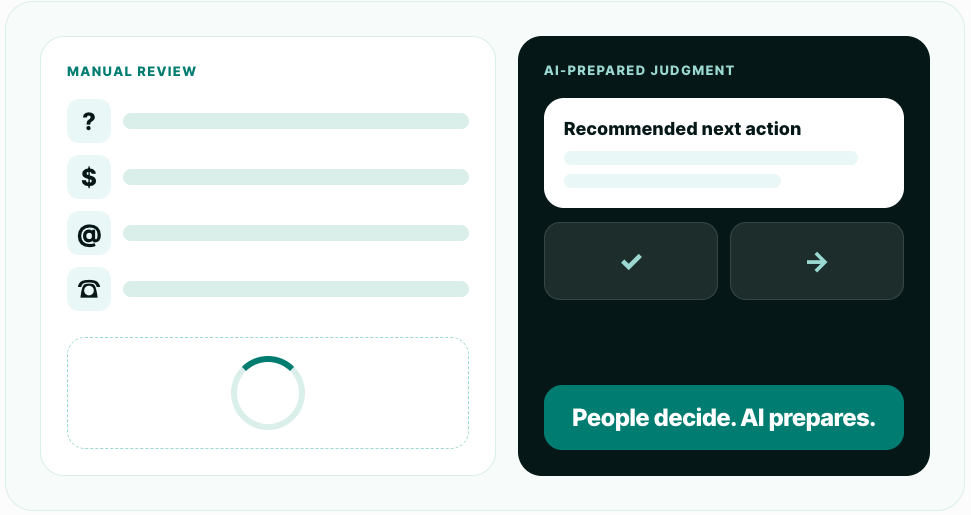
It doesn't replace judgment, but it does prepare judgment.
Instead of asking someone to assemble information from five different places before taking action, AI can organize the account, summarize what has already happened, recommend the next step, and surface anything that requires attention.
People remain responsible for the decision.
They simply spend their time making it instead of preparing for it.
That's exactly the philosophy behind FlexPoint AR Agents. Rather than replacing your finance team, AR Agents help organize collections activity, recommend next actions, answer routine invoice questions, and keep follow-up moving consistently while your team remains in control of every important decision.
If you'd like a deeper look at how purpose-built AI agents differ from traditional AI assistants, our guide on AI Agents for Payments & Billing explains why workflow-specific agents are becoming the next evolution of back-office automation.
Whether you prefer autonomous workflows or a copilot approach, your employees remain in control of every important decision
For a deeper look at how this differs from traditional workflow automation, read AI vs. Automation vs. Manual Payment Collection.
The Most Growth-Focused MSPs Won't Be the Ones Doing More Work
For years, growing an MSP usually meant accepting that the administrative work would grow alongside it.
More clients meant more invoices; more invoices meant more follow-up; more follow-up meant more documentation, more decisions, and more time spent keeping everything organized.
That assumption is beginning to change.
According to Microsoft's 2026 Work Trend Index, 82% of business leaders expect to use digital labor to expand workforce capacity over the next 12 to 18 months. The organizations seeing the greatest benefit from AI aren't simply asking it to work faster, they're redesigning how work gets done.
For MSPs, that doesn't mean replacing technicians, finance teams, or account managers.
It means asking a different question: what work requires one of my people?
For example: answering a difficult billing dispute requires judgment, helping a frustrated client requires empathy, preparing for a quarterly business review requires experience.
But searching through five different systems to figure out whether someone promised to pay last Thursday doesn't.
The goal isn't to automate your relationships but the administrative work surrounding those relationships.
The MSPs that stand out over the next few years won't necessarily be the ones using the most AI. They'll be the ones using it deliberately, removing repetitive work from their teams so those teams can spend more time solving problems, strengthening client relationships, and making better decisions.
That's ultimately where AI creates the most value.
Not by replacing expertise.
By giving experts more time to be expert.
See how AR Agents work and explore the features that help MSPs reduce manual collections work.





.png)