

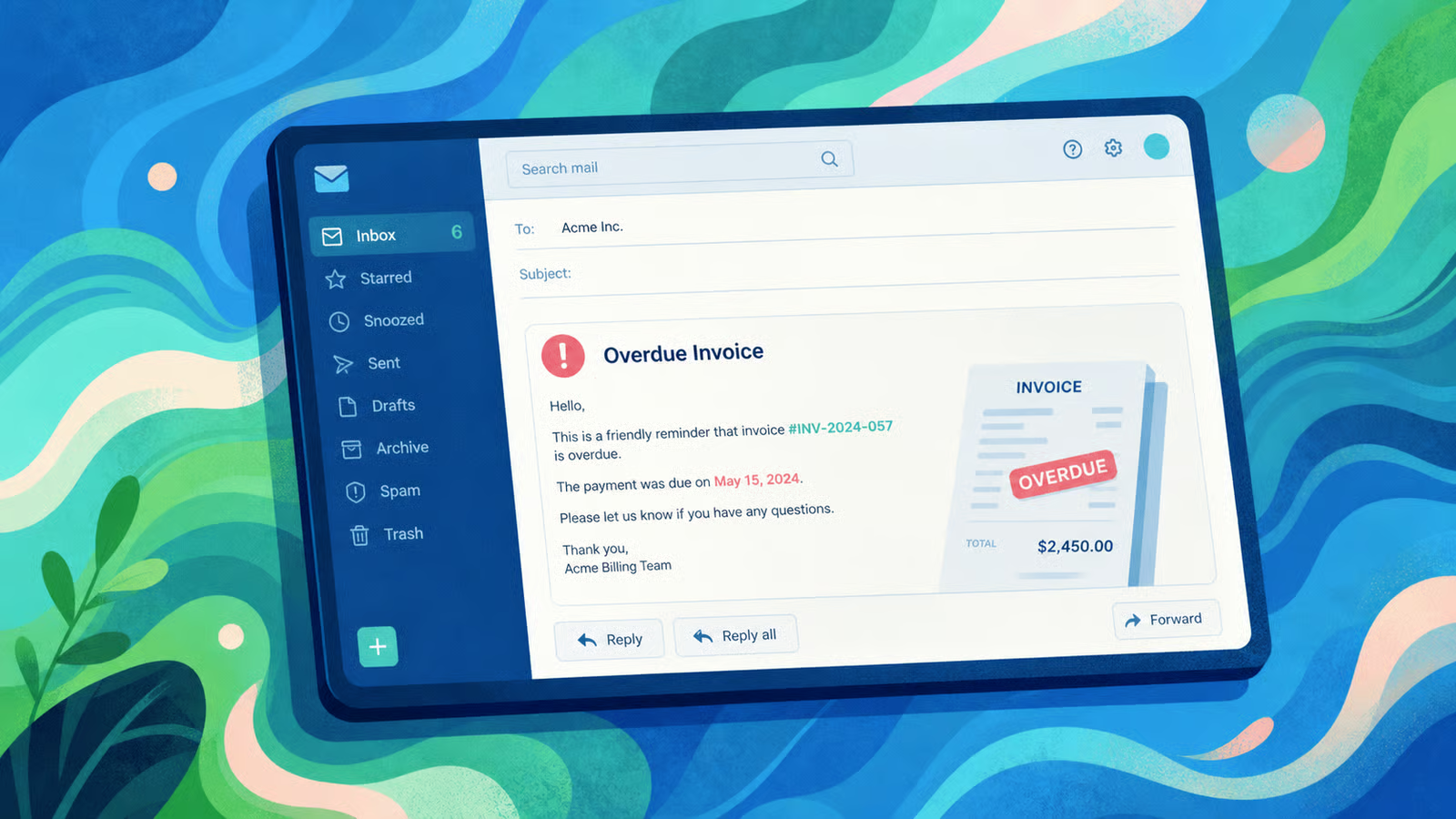
Late invoice emails don't get ignored because clients are bad actors, they are ignored because the email looks low-priority or easy to deal with later.
Think about your own inbox.
Say you have two unread emails, one that's titled "Following up" and the other says "Invoice #4821 for $3,200 due Friday." You know which one you open first, and you know which one you leave for later.
That distinction matters, especially for recurring revenue businesses like MSPs.
Every overdue invoice ties up cash, creates awkward follow-up, and adds manual work for whoever handles AR. The subject line is not the whole collections process, but it is the first filter your reminder has to pass through. If it doesn't get opened, what you wrote inside the email doesn't matter.
This guide covers what makes invoice reminder subject lines work, what kills them, and gives 50+ examples you can use across every stage of the payment follow-up process.
What Makes a Good Invoice Reminder Subject Line?

The goal of a subject line is not to be clever or creative. It is to help the client immediately understand what the email is about and what they need to do.
That means a strong subject line typically includes:
- A specific invoice number
- A due date or days past due
- The amount when context helps
- A clear signal of what action is needed
- A calm, professional tone
What it does not include: vague openers, emotional language, or anything that sounds like it was written by someone who is frustrated.
Struggling with clients who seem to be always paying late? Read "How to Handle Late Payments From MSP Clients" and "Email First or Call First? The Right Sequence for Chasing Late Payments".
Why Subject Lines Matter More for MSP Collections
Your clients are busy people.
Office managers, controllers, owners, IT directors, and more. They are juggling vendor emails, internal tickets, renewals, payroll, and requests from their own team.
So your invoice is one of dozens of things competing for their attention on any given morning.
A subject line like "Following up" is the email equivalent of a sticky note that says "thing." It conveys almost nothing about what is inside or why it needs attention now.
A subject line like "Invoice #4821 due Friday" tells the reader exactly what is happening and creates a clear mental hook. They know the invoice number, they know the deadline, and they know what action the email is asking for before they even open it.
This matters even more for MSPs because invoice emails often get forwarded internally before they get paid. Your contact at the client company may not be the one who cuts the check.
So a subject line with the invoice number, amount, and due date is something they can forward to their accounting team with the full context attached. A subject line that says "checking in" is something they have to translate before forwarding, which means it is something they are more likely to put off.
The Formula for a Strong Invoice Reminder Subject Line
There is no single perfect format, but effective invoice reminder subject lines follow one of these structures:
Before due date: Invoice #[number] due [date]
Early overdue: Invoice #[number] is past due
More direct: Action needed: invoice #[number]
Escalation: Final reminder before next steps: invoice #[number]
Internal-forwarding friendly: Invoice #[number] for $[amount] due [date]
The pattern is specificity over pressure and the subject line should reflect that.
Subject Line Mistakes That Cause Invoice Emails to Get Ignored
Too vague: "Following up," "Checking in," "Your account," and "Payment reminder" on their own give the reader almost no information. They are easy to skip and easy to forget.
Too aggressive too soon: "Final warning," "Immediate action required," and "Collections notice" are phrases that belong at the end of a long escalation sequence, not in a reminder email sent five days after the due date. Using strong language early trains clients to ignore it because they learn it means nothing yet.
Missing invoice details: A subject line without an invoice number, due date, or amount makes the email harder to act on and harder to forward. The person receiving it has to open it just to understand what it is about, and then find the invoice separately to take action.
Sounding emotional: "We have tried reaching you multiple times," "Still waiting on payment," and "You have not paid" put the client on the defensive before they have even read the email. Defensive clients do not pay faster. They push back, delay, or ignore.
50+ Invoice Reminder Email Subject Line Examples
Pre-Due Reminder Subject Lines
Use when the invoice is not late yet. Tone: helpful, light, no pressure.
- Invoice #[number] due [date]
- Upcoming payment: invoice #[number]
- Reminder: invoice #[number] due soon
- Invoice #[number] is due this week
- Payment reminder for invoice #[number]
- Upcoming invoice payment for [company]
- Invoice #[number] due in 3 days
- Friendly reminder: invoice #[number]
- Your upcoming payment for invoice #[number]
- Reminder before due date: invoice #[number]
Due Date Subject Lines
Use on the due date. Tone: clear and factual, no extra pressure.
- Invoice #[number] is due today
- Payment due today: invoice #[number]
- Reminder: invoice #[number] due today
- Today's due invoice: #[number]
- Invoice #[number] payment due today
- Action requested: invoice #[number] due today
- Payment link for invoice #[number]
- Invoice #[number] for $[amount] due today
Early Past-Due Subject Lines (Days 1 to 5)
Use when the invoice just crossed the due date. Assume the client forgot.
- Invoice #[number] is past due
- Past due: invoice #[number]
- Payment reminder: invoice #[number] is overdue
- Invoice #[number] was due on [date]
- Follow-up on invoice #[number]
- Reminder: payment needed for invoice #[number]
- Invoice #[number] for $[amount] is past due
- Action needed: invoice #[number]
- Payment still open: invoice #[number]
- Invoice #[number] remains unpaid
7 to 14 Day Past-Due Subject Lines
Use when early reminders have not produced a response. Tone: slightly more direct, still professional.
- Second reminder: invoice #[number]
- Invoice #[number] is now [X] days past due
- Action needed on overdue invoice #[number]
- Payment follow-up: invoice #[number]
- Invoice #[number] still requires payment
- Overdue balance: invoice #[number]
- Payment requested by [date]: invoice #[number]
- Please review invoice #[number]
- Invoice #[number] for $[amount] requires attention
- Past-due invoice #[number]: payment link inside
14 to 30 Day Past-Due Subject Lines
Use when the account needs more serious follow-up. Tone: direct, calm, operational.
- Urgent review requested: invoice #[number]
- Invoice #[number] requires attention
- Payment needed to avoid next steps: invoice #[number]
- Overdue invoice #[number]: response requested
- Please respond regarding invoice #[number]
- Payment follow-up needed by [date]
- Account follow-up: invoice #[number]
- Invoice #[number] remains unresolved
- Outstanding balance for [company]
- Payment status needed: invoice #[number]
Escalation Subject Lines
Use only when escalation is actually the next step. Tone: firm, specific, contract-aligned.
- Final reminder before next steps: invoice #[number]
- Formal notice: invoice #[number] remains unpaid
- Service limitation notice: invoice #[number]
- Action required by [date]: invoice #[number]
- Overdue balance requires response by [date]
- Account escalation notice: invoice #[number]
- Written notice regarding invoice #[number]
- Payment required to avoid service limitation
Subject Lines for Large Balances
Use when the amount itself is the most important signal. Tone: serious but not hostile.
- Outstanding balance of $[amount]
- Payment follow-up: $[amount] outstanding
- $[amount] balance requires review
- Outstanding balance for [company]
- Payment status needed for $[amount]
- Invoice balance of $[amount] remains open
Subject Lines for Payment Plan Conversations
Use when you are opening a conversation about flexible payment terms. Tone: collaborative, human.
- Payment options for invoice #[number]
- Let's discuss payment timing
- Payment plan request for invoice #[number]
- Follow-up on payment options
- Invoice #[number]: payment timing discussion
- Payment arrangement for outstanding balance
How Subject Lines Should Change by Stage
The subject line is one of the clearest signals to the client about where they are in the collections process.
So using escalation language at Day 3 trains clients to ignore it while using soft language at Day 45 signals that the situation still isn't serious. The tone should always match reality.
Read more about how to build a proper escalation framework: "Creating a Collections Policy: Templates for MSPs".
Should You Use "Urgent" in Invoice Reminder Subject Lines?
Only when the situation is actually urgent.
"Urgent" is like a car alarm. When it goes off constantly, people stop responding to it.
If every invoice reminder subject line contains the word "urgent," clients learn that it does not mean anything in your emails specifically, and they stop treating it as a signal.
For early-stage reminders, specificity does more work than urgency. "Invoice #4821 due Friday" creates more pressure than "Urgent: payment reminder" because it gives the reader concrete information to act on.
It's important to save stronger language, "action required," "response needed by [date]," "formal notice," for the stages where that language is actually accurate.
Should You Include the Amount in the Subject Line?
Sometimes. Here is when it helps and when it does not.
Include the amount when:
- The balance is large enough that the dollar figure communicates seriousness
- Multiple invoices are outstanding and you want to signal the total exposure
- The client has ignored earlier reminders and the number may prompt action
- The email is likely to be forwarded internally and full context helps
Leave the amount out when:
- The email may be opened by someone other than your billing contact on a shared line
- The invoice is routine and the stage is early enough that specificity is sufficient
- The client has communicated any sensitivity about how billing details are handled
Should Subject Lines Be Personalized?
Yes, but in a way that provides clarity rather than performing familiarity.
A subject line like "[Company] invoice #[number] due [date]" is useful personalization. It helps the client identify the invoice quickly and makes the email easier to forward internally. That is personalization doing actual work.
A subject line like "Quick favor, [Name]?" or "Did you miss this?" is personalization as a trick. These formats can work for marketing emails trying to get cold opens. But they come across as manipulative in a collections context and can create a defensive reaction before the email is even opened. For AR follow-up, personalization should support accuracy, not manufacture false warmth.
The context in which personalization like that would be appropriate is if your client is your friend or family member with whom you already have established closeness. But pretending to be friendly with your clients when asking for payment can feel unprofessional and inappropriate even if you are trying to be genuinely warm.
A Recommended Subject Line Sequence for MSPs
If you want a simple, reusable sequence you can implement today:
- Pre-due: Invoice #[number] due Friday
- Due date: Invoice #[number] is due today
- Day 3: Invoice #[number] is past due
- Day 7: Action needed: invoice #[number]
- Day 14: Payment status requested: invoice #[number]
- Day 21: Response needed by [date]: invoice #[number]
- Day 30: Formal notice: invoice #[number] remains unpaid
Each subject line is specific enough to act on and escalates in tone without jumping ahead of where the situation actually is.
How Automation Makes Subject Lines Actually Matter

A strong subject line only helps if the reminder goes out at the right time. This is where a lot of MSPs lose ground.
Manual AR processes depend on someone remembering to send the right reminder at the right stage.
When that person is busy, traveling, or managing a full queue of other work, pre-due reminders get skipped, Day 7 follow-ups go out at Day 14, and the escalation email lands before the earlier stages had a chance to work. The subject lines you carefully selected stop mattering because the timing is off.
AR automation solves the timing problem.
Reminders go out on the configured schedule, payment links stay current, follow-up stops automatically when payment clears, and the subject line can change by stage without anyone manually managing it. The email that goes out at Day 3 actually goes out at Day 3.
FlexPoint's AR Agents go further by adjusting outreach based on each client's payment behavior, logging every interaction for documentation, and surfacing the accounts that need human attention rather than another automated message.
Key capabilities include:
- Autonomous AI voice calling for overdue invoice follow-up
- Multi-step email reminder sequences based on aging stage
- Tone calibrated per client and escalation tier
- Payment status and activity tracking
- Approval-required workflows for sensitive accounts
- Autonomous or copilot modes depending on how much control your team wants
- Full visibility into every action taken and why it was triggered
- Automatic pause of outreach when payment posts or the client responds
With AR automation and autonomous agents, your cash flow becomes secured and those subject lines you implemented become part of a consistent, staged system rather than individual emails that go out whenever someone gets around to it.
Have you thought about how AI could fit into your back-office? Read more "How to Use AI In your MSP Back Office".
Clarity Over Cleverness
Invoice reminder subject lines do not need to be clever. They need to be clear.
The best subject lines make the invoice easy to identify, the payment status easy to understand, and the next step easy to take.
For MSPs that means invoice numbers, due dates, specific action language, and a tone that escalates gradually instead of starting at confrontation and having nowhere to go.
But subject lines are only one incredibly small layer. Ironing this out is dipping your toe into smoothing out your AR processes.
The bigger win is making sure the right subject line goes out at the right time, every billing cycle, for every account. So when that consistency is in place, clients have fewer reasons to delay, follow-up takes less time, and your team can spend less energy on the reminders that should have handled themselves.
Your subject lines matter when the process behind them is consistent.



.png)