

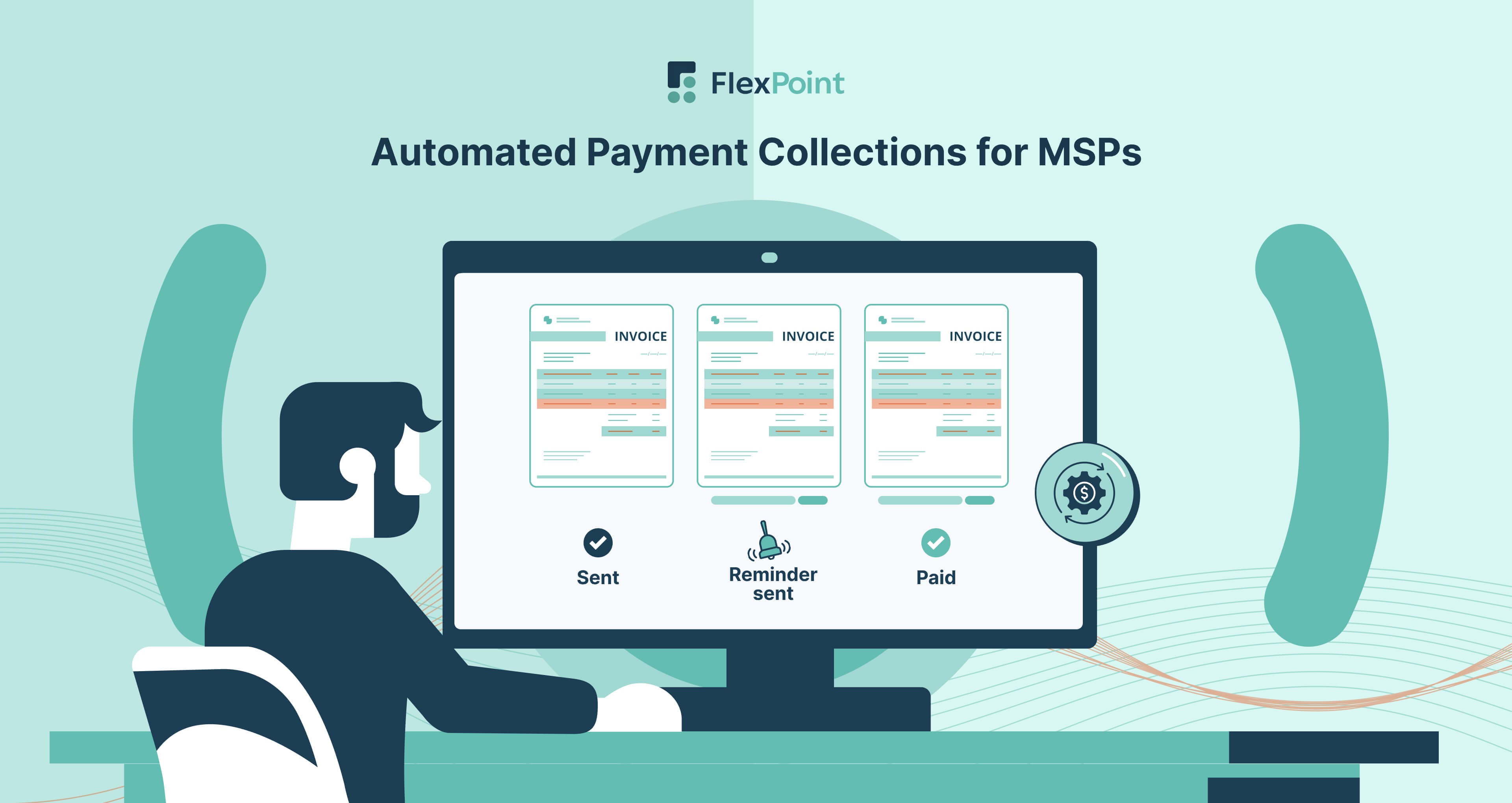
According to MSP Insights, 81% of MSPs struggle with timely payment collection, with an average delay of 60 days. Most Managed Service Providers (MSPs) deliver top-notch services at thin profit margins, so collecting payments on time is essential to sustaining operations.
Manual invoicing, limited payment options, lack of payment reminders, and clients forgetting to pay often lead to payment collection delays. Inconsistent payments strain liquidity, disrupt revenue predictability, and impact your MSP's bottom line.
Poor payment collection processes hurt profitability, forcing MSPs to spend time and resources on collections that could be better used elsewhere. Additionally, chasing payments can strain client relationships and damage the MSP's reputation. Fixing these issues is critical for MSPs to maintain financial stability and scale effectively.
In this article, we’ll list the modern tools and strategies that can address common MSP payment collection challenges.
We will also discuss how these will transform the payment collection process, making it faster, more reliable, and less labor-intensive. We will also discuss how modern payment platforms automate and streamline the entire invoice-to-payment journey.
Why Payment Collection Is a Challenge for MSPs
According to QuickBooks, late payments impact the growth of 89% of businesses, with 76% planning to address this issue to prioritize long-term growth. Despite strong client satisfaction and loyalty, timely payments remain a persistent challenge for many MSPs. Inconsistent and inefficient payment collections may be due to outdated internal processes and unpredictable client behavior.
Here are the key reasons leading to MSP payment collection challenges:
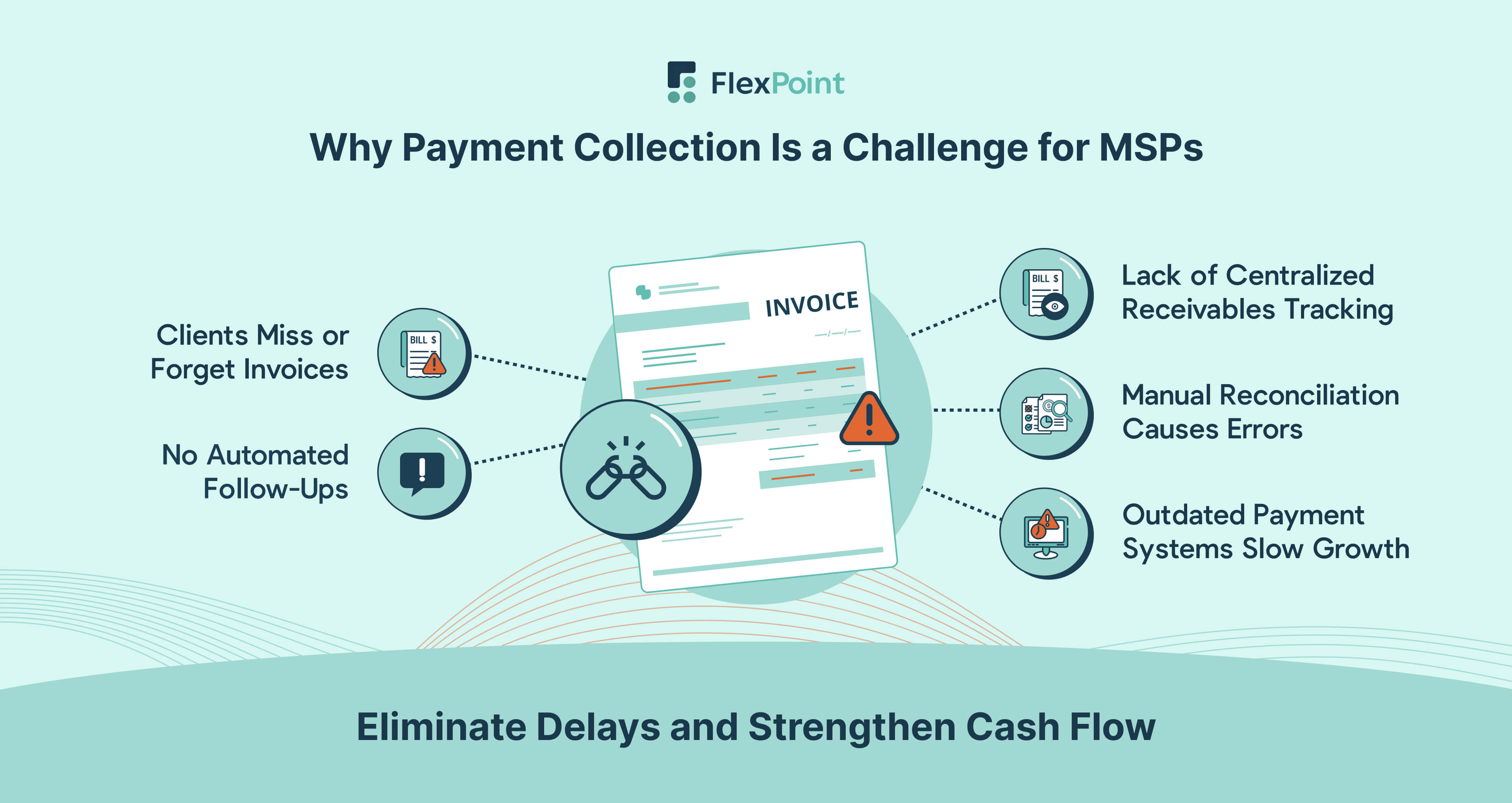
- Clients Often Ignore or Forget About Invoices: Many MSP clients operate in busy environments where tasks like reviewing and paying invoices are frequently overlooked. Without streamlined payment approval processes, invoices may be missed or delayed. When clients fail to meet invoice due dates, it directly affects MSPs that rely on monthly recurring revenue (MRR) models.
- Lack of Automated Follow-Ups Leads to Delays: According to QuickBooks, 65% of businesses spend an average of 14 hours each week chasing payments. Many MSPs still rely on spreadsheets, calendar reminders, or staff manually checking aging invoices and sending follow-up emails. These legacy methods of follow-ups are inconsistent and fail to create the urgency needed to prompt payment.
- No Centralized System for Tracking Receivables: Effectively tracking outstanding payments is a challenge when billing data, service logs, and payment collection are spread across multiple tools. The fragmented approach causes cash flow issues for MSPs due to missed payments, delayed collections, and unnecessary follow-ups from errors in tracking receivables.
- Manual Payment Processes Complicate Reconciliation: Finance teams often spend a significant amount of time reconciling data across various software systems, including billing software, PSA tools, and accounting software.. Manually matching invoice data, tracking bill payments, and updating accounting records may lead to errors and delays. Inaccurate records or delayed payments disrupt your MSP's cash flow reconciliation.
According to PYMNTS, 62% of businesses still use legacy payment methods, such as paper checks. MSPs relying on outdated payment systems or basic tools struggle with recurring billing, leading to inefficiencies, manual errors, and disrupted cash flow. These outdated tools lack automation and real-time insights, making it more challenging for MSPs to manage complex billing needs, which ultimately hinders growth and investment opportunities.
Ignoring payment challenges can harm your MSP client relationships, increase operational costs, and hinder growth. Streamlining payment collection is essential to enhance financial health and foster long-term success. By utilizing modern payment collection tools and streamlined billing processes, MSPs can address internal invoicing and reconciliation challenges, as well as reduce payment delays at the client end.
The Impact of Poor Payment Collection on MSP Cash Flow
According to Balance, 68% of companies that receive half of their payments late face cash flow problems. For MSPs, revenue is only realized once it is collected. Slow or inconsistent payment collection can have a significant impact on business operations. Payment delays disrupt daily workflows and limit long-term growth opportunities.
Some common impacts of poor payment collection on MSP cash flow are:
- Delayed Cash Flow: Late payments can significantly impact your ability to manage essential business expenses, such as payroll, vendor payments, software subscriptions, and taxes. MSPs mostly operate on lean margins and rely on predictable monthly revenue, so cash flow disruptions can delay team payments, hinder investments in tools, impact service quality, and risk client retention.
- Increased Administrative Load: Without an efficient payment collection system, finance and operations teams can spend a significant amount of time manually managing payments. You may waste resources on avoidable administrative tasks, such as tracking invoice statuses in spreadsheets, sending follow-up emails, and reconciling payments across disconnected platforms.
- Higher DSO: Days Sales Outstanding (DSO) is the time taken to collect payments after a sale. A higher DSO indicates that more funds are tied up in accounts receivable rather than being available for reinvestment. Rising DSO can impact your MSPs' liquidity, leading to reliance on credit or delays in hiring, training, and expansion.
- Client Relationship Strain: Payment issues, such as unclear invoices or late fees, can strain client relationships, delay payments, and risk contract renewals. Poor billing communication and frequent payment disputes can lead to client churn and damage your reputation.
Efficient payment collections are essential for MSPs to maintain financial stability, reduce inefficiencies, preserve liquidity, and foster stronger client relationships. It allows you to focus on innovation and improving service delivery, rather than addressing cash flow issues.
6 Best Practices for Streamlining Payment Collection
MSPs must optimize payment collection by adopting structured and technology-driven practices. This approach reduces delays, minimizes administrative overhead, and enhances client relationships.
Here are six best practices for streamlining MSP payment collection:
1. Establish Clear Payment Terms:
Clear payment terms are essential for ensuring timely payment collections and preventing confusion. Right from the start of any client relationship, make sure expectations are outlined in service agreements, including:
- Payment due dates (e.g., “NET 15” or “Due on receipt”)
- Accepted payment methods (ACH, credit card, or installment plans)
- Late payment fees or interest policies
- Escalation procedures for non-payments
During client onboarding, review payment terms verbally and in writing to ensure clients understand their obligations. Provide a summary of the payment terms, along with the legal contract, for easy reference.
Communicate contract details to clients in simple, jargon-free language to ensure they are easily understood. Include payment terms on invoices, and discuss any late fees, penalties, or fees in advance. Explain payment terms and processes, such as how to set up AutoPay or what happens if a payment is late, on the client portal for quick reference. Review payment terms during renewals or scope changes to ensure accuracy and consistency.
2. Use Automated Invoicing and Reminders:

Relying on manual invoicing can be both time-consuming and error-prone, increasing the risk of forgotten or delayed invoices. MSPs must use automated invoicing tools that streamline the process by generating and sending invoices based on their billing cycles, whether monthly or milestone-based.
Automate recurring invoices to ensure clients consistently receive bills on time. Additionally, schedule reminders before, on, and after due dates to help clients stay on top of payments. Ensure your billing automation system allows for customization, so that invoices and reminders align with your brand's tone and maintain a professional appearance.
A fixed invoicing schedule and timely (automated) follow-ups reduce the chance of missed or delayed payments. Integrate service logs or project completion triggers into invoicing workflows to align billing with service delivery.
3. Make It Easy for Clients to Pay:

According to Deloitte, 48% of B2B customers delay payments due to unclear invoices and difficulty in finding accurate pricing. Clear and itemized invoices help avoid delays and confusion. Mentioning payment terms and methods on invoices increases the likelihood of timely payments.
Frictionless payment processes can significantly improve cash flow and client satisfaction. MSPs must help clients pay with their preferred method easily by offering payment options, such as ACH, credit cards, or flexible financing (or installment plans). Integrate secure payment gateways into the automated invoicing system to speed up transactions.
An intuitive and user-friendly client portal simplifies the payment experience. It provides accurate information in real-time, allowing clients to view invoices, make payments, and track their history. By simplifying the payment experience, MSPs can enhance client satisfaction and reduce the number of excuses clients have for making late payments.
4. Track Aging Receivables Proactively:

According to PYMNTS, manual accounts receivable (AR) processes take 67% longer to follow up, and the average DSO is 30% longer. MSPs can prevent overdue payments by proactively tracking aging receivables. Categorize receivables by age into 30-day, 60-day, and 90-day categories to prioritize collection efforts.
Utilizing automation for receivables collection enables MSPs to effectively track clients with outstanding payments. Implementing dashboards allows you to identify accounts with a history of late payments. You can offer Flexible Payment Options to these clients.
Integration with PSA tools (such as ConnectWise, Autotask, SuperOps, and HaloPSA) enables automated tracking of invoice statuses. These systems generate alerts when invoices cross due date thresholds or are paid, providing real-time visibility. Your staff can use the insights to follow up on overdue accounts, streamline reconciliation, and resolve payment issues efficiently. By syncing with billing dashboards, PSA integrations enable MSPs to prioritize high-risk receivables, thereby reducing Days Sales Outstanding (DSO) and minimizing revenue leakage.
Additionally, regularly reviewing aging reports during team meetings ensures priority alignment, steady cash flow, and reduced write-offs. The insights also help you identify cash flow challenges and flag high-risk accounts for immediate follow-up.
5. Escalate Professionally When Needed:
According to Ataradius, an average of 8% of B2B invoices turn into bad debts. MSPs must make their best efforts to ensure timely payment collections and also define an escalation process to prevent delayed payments from becoming bad debts.
Establish a comprehensive payment collection policy within your service agreement to maintain a professional approach. It must include reminders via message, email, and phone calls. You may consider placing account holds or pausing services for overdue payments. Adhere to the policy without frequent exceptions to minimize overdue payments.
MSPs must adopt measures to encourage prompt payment and resolve the concerns amicably. However, you must prepare to escalate collections that remain overdue despite reminders. You can involve a third-party collections agency or initiate legal action as a last resort.
A clear and consistent escalation plan signals to clients that you take payment terms seriously. Properly document each step of the process to maintain transparency and protect your MSP from legal disputes. Communicate clearly with clients about the consequences of non-payment, including late fees and potential legal action, to prevent damage to client relations.
6. Train Staff on Consistent Follow-Up:
The success of your payment collection process depends on your team's ability to implement it effectively. Train your staff about the escalation process and provide them with standardized templates for emails and calls to maintain a consistent message. This ensures they communicate professionally.
Provide training to finance teams, account managers, and customer success representatives on best practices for following up on overdue payments and communicating escalation guidelines. Ensure they use appropriate tone and language during each stage of escalation to prevent damage to client relations.
Regularly review overdue accounts and assign clear follow-up responsibilities to ensure accountability and prompt action.
Additionally, invest in staff training to improve their communication skills, conflict resolution abilities, and customer service techniques.
MSPs can improve collection speed and client satisfaction with tech-enabled practices. Automated communication and proactive monitoring help reduce DSO while freeing up resources for growth, making timely payment collection a strategic advantage.
Tools and Automation That Improve MSP Payment Collection
Modernizing MSP payment collection requires the right mindset, strategy, and tools. By automating manual tasks and integrating systems, MSPs can reduce aging receivables, improve collection rates, and ensure consistent cash flow. The process streamlines payment collection, minimizes errors, and frees up staff to focus on higher-value work.
Here are the key tools and automation systems to improve MSP payment collections:
1. PSA & Accounting System Integrations:

Disconnected systems are a significant bottleneck for MSP payment collections as they lead to duplicate data entry, invoicing errors, and missed follow-ups. Integrate your PSA (Professional Services Automation) tool, such as ConnectWise, Autotask, HaloPSA, or SuperOps, with your accounting software, like QuickBooks Online, QuickBooks Desktop, or Xero, to address these challenges. It helps create a seamless data flow, enables real-time data sync, and ensures hands-off billing.
The integration of PSA and accounting software with an automated billing system enables:
- Automatic invoice generation upon milestone completion in the PSA. It ensures accurate and timely billing without manual input.
- Seamless transfer of time entries, service tickets, or project data into accurate invoices. It eliminates duplicate data entry, reduces errors, and ensures consistent financial records across all your platforms.
- Scheduling invoices based on billing cycles ensures no invoices are missed. Regular billing speeds up payment cycles.
- Real-time visibility into payment status and sending automated reminders for timely payment collection.
- Streamlined reconciliation and reduced administrative burden using real-time data synchronization. It helps maintain consistency and eliminate data discrepancies across systems.
- AutoPay rules based on agreement clauses stored in the PSA help automate payment collections.
- Payment data flows bidirectionally between PSA and accounting systems, ensuring both platforms reflect accurate and up-to-date payment statuses.
Additionally, the integration enables you to make data-driven decisions for your MSP, providing access to reliable financial reports based on accurate data from both systems (the PSA and the billing system). You get a comprehensive view of your MSP's performance, including project profitability, resource utilization, and cash flow analysis.
2. Automated Billing Platforms:

Automated billing platforms help MSPs create a scalable and efficient payment collection process. By eliminating the need for manual invoicing and automatically tracking overdue payments, these platforms streamline billing operations for MSPs.
The key benefits of using an MSP billing automation platform are:
- Scheduling invoices for monthly, project-based, or usage-based billing.
- Payment collection through AutoPay options for recurring clients.
- Send real-time invoices for milestone-based billing models and automatically notify clients about upcoming due dates or overdue payments.
Automating billing ensures consistency, prevents revenue loss, and helps MSPs maintain cash flow while reducing manual administrative tasks.
3. Client Payment Portals:
A client-facing portal offers a seamless payment experience, facilitating faster collections and enhanced client satisfaction.
These portals provide clients with the ability to:
- View and download invoices anytime (both current and past).
- Pay securely using their preferred methods, such as ACH or credit card.
- Track payment history and resolve billing questions through the portal.
A robust billing platform with branded client payment portals ensures timely invoicing and payment processing. It also reduces inbound billing inquiries and delays due to miscommunication. Client portals enhance operational efficiency and foster stronger client relationships by reducing the number of support queries.
4. Payment Alerts & Dunning Workflows:
Client payments may fail due to expired cards or insufficient funds. These lead to payment delays and may also result in 20 to 40% churn. You must detect and respond to payment failures in real-time to improve payment collection.
Payment alerts and dunning workflows notify MSPs instantly when a payment fails, triggering customized email sequences to prompt action. For example, an automated late payment follow-up workflow might send a polite reminder at three days overdue, escalating to a firmer notice at 10 days. These tools expedite payment recovery while maintaining professionalism and minimizing manual follow-ups.
5. DSO & AR Reporting Dashboards:

Days Sales Outstanding (DSO) and Accounts Receivable (AR) dashboards provide real-time insights into collection performance. MSPs must track critical metrics and billing KPIs such as invoice aging, overdue accounts, and collection trends to identify high-risk accounts, habitual late-paying clients, and emerging collection patterns.
Clear visibility into receivables enables proactive financial management, enhanced forecasting, and informed decision-making. DSO and A/R reporting dashboards help your team prioritize follow-ups based on their impact and improve overall cash flow efficiency.
In short, automation tools enable MSPs to achieve a reliable cash flow and reduce administrative overhead by streamlining workflows and minimizing billing errors. Utilizing automation allows you to concentrate on delivering exceptional service while ensuring timely payments.
How FlexPoint Simplifies and Speeds Up Payment Collection for MSPs

FlexPoint is a billing platform purpose-built to help Managed Service Providers (MSPs) automate payment collection and improve cash flow.
The platform offers the following robust features to address common MSP payment collection challenges:
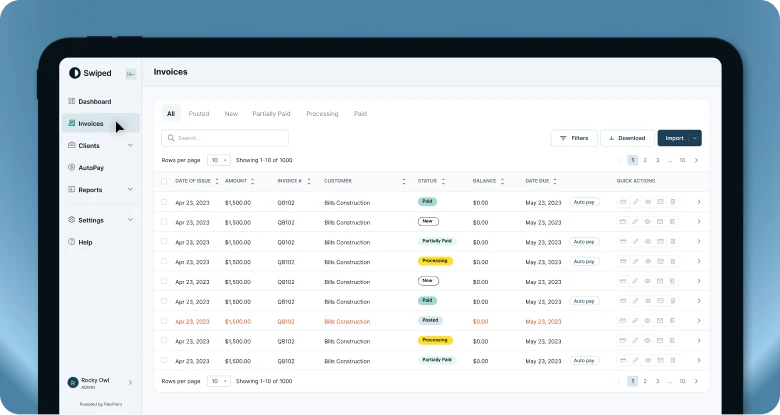
- Automated Invoicing and Payment Reminders: FlexPoint automates invoice creation and sends reminders, eliminating the need for manual follow-ups. Invoices are generated based on predefined rules and PSA data. Alternatively, if you choose to send invoices from your PSA software or accounting software, FlexPoint ensures that the data is synced and reconciled across all systems. Billing cycles are maintained by sending invoices on schedule and following up regularly to ensure timely payment.
- Multiple Payment Methods: FlexPoint's secure client portal supports ACH, credit card, and flexible financing options, catering to diverse client preferences. There is also an option for credit card surcharging (but check if it’s legally permitted in your state), to help MSPs offset processing fees.
- Real-Time Payment Tracking and Alerts: FlexPoint provides instant visibility into invoice statuses across all clients through intuitive dashboards. Real-time alerts notify MSPs of failed or delayed payments, enabling swift action to prevent revenue loss.
- Seamless Integration with PSA and Accounting Tools: FlexPoint syncs with platforms like ConnectWise, Autotask, QuickBooks, and Xero to ensure accurate data flow and automated reconciliation. It eliminates manual data entry and saves administrative expenses.
- Compliance and Security: FlexPoint adheres to PCI-DSS standards to ensure secure payment processing. Encrypted transactions and robust data protection safeguard client information. Compliance with regional regulations, such as surcharging laws, helps MSPs maintain protection while fostering trust among clients.
With FlexPoint, MSPs spend less time chasing payments and more time scaling their business, ensuring predictable cash flow and stronger client relationships.
Conclusion: Improve Collections, Strengthen Financial Health
Efficient payment collection is crucial for MSPs to maintain a healthy cash flow, build strong client relationships, and drive growth.
Automated tools help MSPs streamline processes, reduce delays, ease admin tasks, and secure predictable revenue.
Evaluate your collection systems to determine if manual processes or outdated systems are hindering your progress. Streamline workflows with clear terms, automated invoicing, and client portals to improve payment collection.
Modern billing automation tools, such as FlexPoint, automate invoicing and payment tracking, helping MSPs secure faster payments. It helps improve your MSP's financial health by optimizing billing cycles and payment collection.
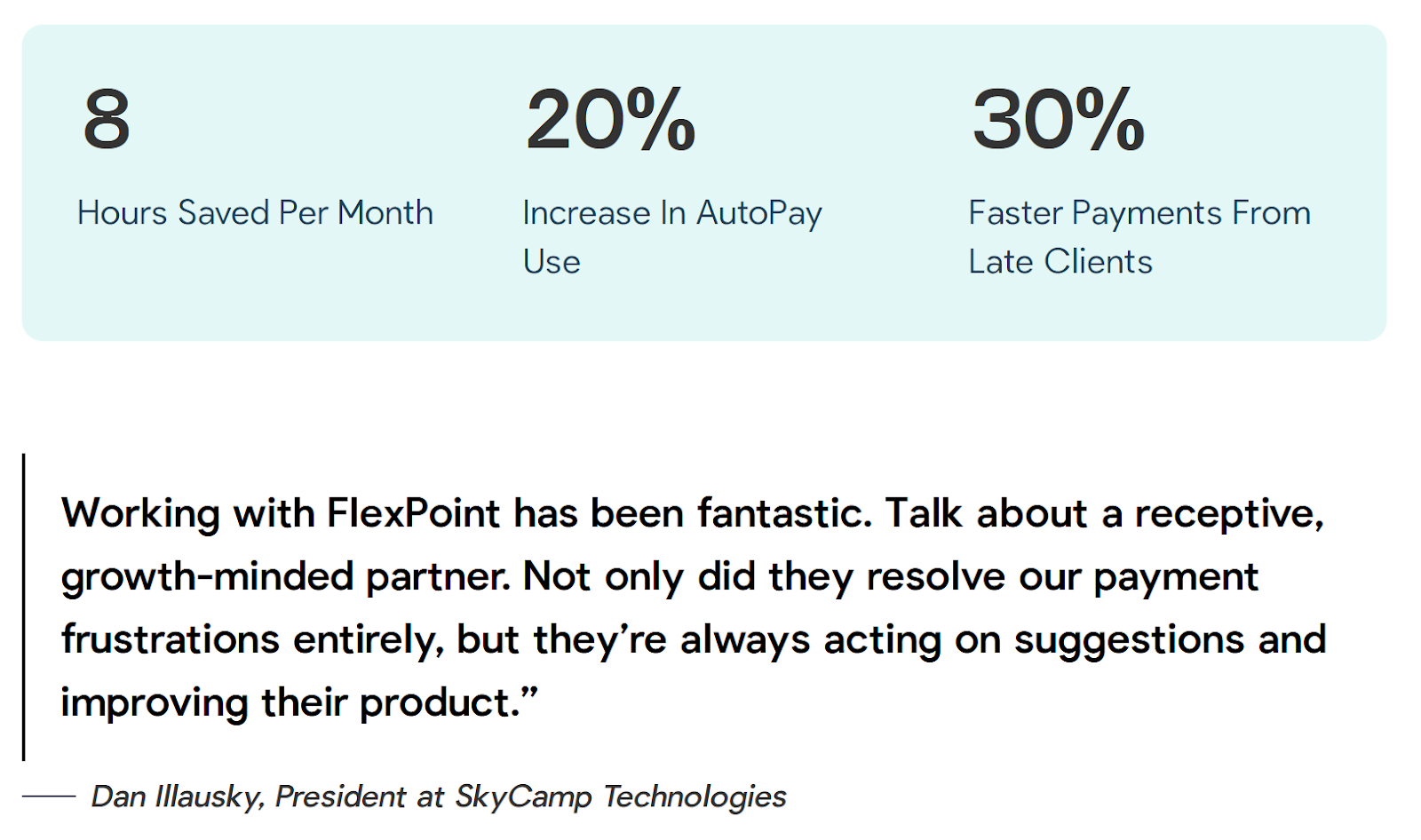
Let’s take the example of SkyCamp Technologies, an Ohio-based MSP, which struggled with inefficient payment collection due to multiple disconnected billing platforms for collecting payments from clients using different payment methods. FlexPoint helped consolidate its invoicing into a single, automated system, integrating seamlessly with QuickBooks for error-free reconciliation. FlexPoint’s user-friendly client portal and AutoPay feature helped the MSP collect payments 30% faster. The platform offered unified dashboards for real-time visibility into invoice statuses, automated payment reminders, and streamlined workflows, helping the MSP save 8 hours monthly on administrative tasks.
Struggling with late payments or clunky collection processes?
Schedule a demo to see how FlexPoint transforms your invoicing and collections.





.png)