

Yeah, yeah, national bank outage
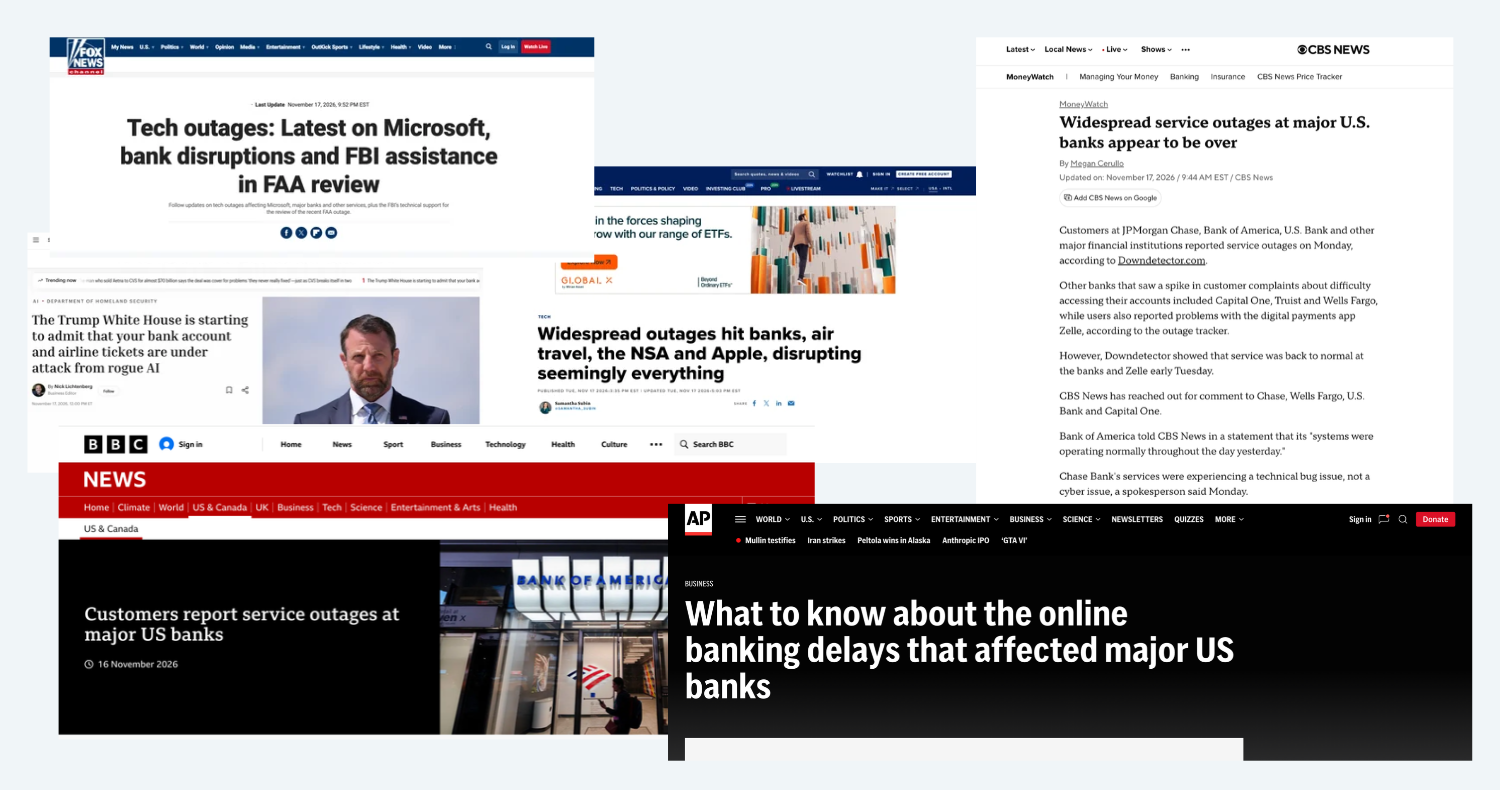
Ah...Monday, November 16. Chase was down, Zelle was lagging, Bank of America and Wells Fargo customers were flooding Downdetector. Maybe your first thought was some version of this: annoying, but that's the bank's problem. My clients can still pay me, right?
Maybe. But that shrug is the most expensive assumption in your business.
Here's our take: just because it's a banking problem, doesn't mean it's just a banking problem. Every dollar your clients owe you travels through a chain of banks, processors, and networks you don't control. When one link stalls, your money stalls with it, and nobody calls to tell you. You find out at month end when the deposits don't match the invoices.
November gave us a near-perfect stress test. Let's look at what broke (or better, who's getting blamed), and what it should change about how you collect.
What happened in November 2026
Three major failures hit in three straight business days, and two of them sit directly on the path between your invoice and your bank account.
What a week! A few details deserve a second look.
Chase said the issue was "not systemic" and that other banks were affected only when they were party to a Chase transaction. That's technically reassuring and practically useless. Chase holds the most assets of any U.S. bank and handles payments for other institutions, so "only if Chase was involved" covers a lot of your clients.
Some affected parties blamed Zelle at first. Zelle said its own network was running fine. Also true. But Zelle runs through participating banks, so when a bank stalls, the payment stalls.
And the Microsoft outage? Users in 74 countries couldn't reliably open their mailboxes, SharePoint files, or Teams chats, and messages that did send often arrived late (very late). Now, to give Microsoft an out, that wasn't a banking failure. It's a billing failure, because for many MSPs, email is the only delivery mechanism for an invoice.
Why "it's the bank's problem" is shortsighted
The outage is the bank's problem. The delayed cash is yours. Here's why MSPs should see November as a reality check:
Your money takes a longer road than you think.
A client payment doesn't jump from their account to yours. It moves from their bank, through a processor or network, to your bank, and only then does it become money you can spend. On November 16, Chase said other banks were affected only to the extent they were a party to a Chase transaction. Read that from your side of the table: if your client banks with Chase, or you do, you were a party. Your bank's status page said green all day. It didn't matter.
"Paid" and "spendable" were already two different things.
Even on a normal day, ACH and card payments can take one to three business days to clear, according to the 2026 QuickBooks Small Business Late Payments Report. Nearly half of owners (49%) say those standard processing times already create cash flow gaps. An outage widens that gap between payment and available funds.
Your cushion might be thinner than it used to be.
Bluevine's 2026 cash flow survey found the typical small business cash buffer fell from about a month in 2025 to about two weeks in 2026, and 43% of owners now hold less than a month of operating cash. The same QuickBooks report found 39% of owners say a single late payment made it hard to cover payroll or bills in the past year. When your runway is two weeks, a two-day stall at the wrong moment isn't trivia.
MSPs feel this more than most.
Your revenue is recurring and predictable, which is great, until it means your collections cluster. Most MSPs bill on or around the first of the month. Your payroll, your vendor bills, and your license renewals cluster too. It's fine if an outage happens on the 16th of the month, but they don't really schedule these kinds of things, do they? The cascading effects of, say, a widespread credit card processing outage could reach far and wide.
And the invoice may never have arrived.
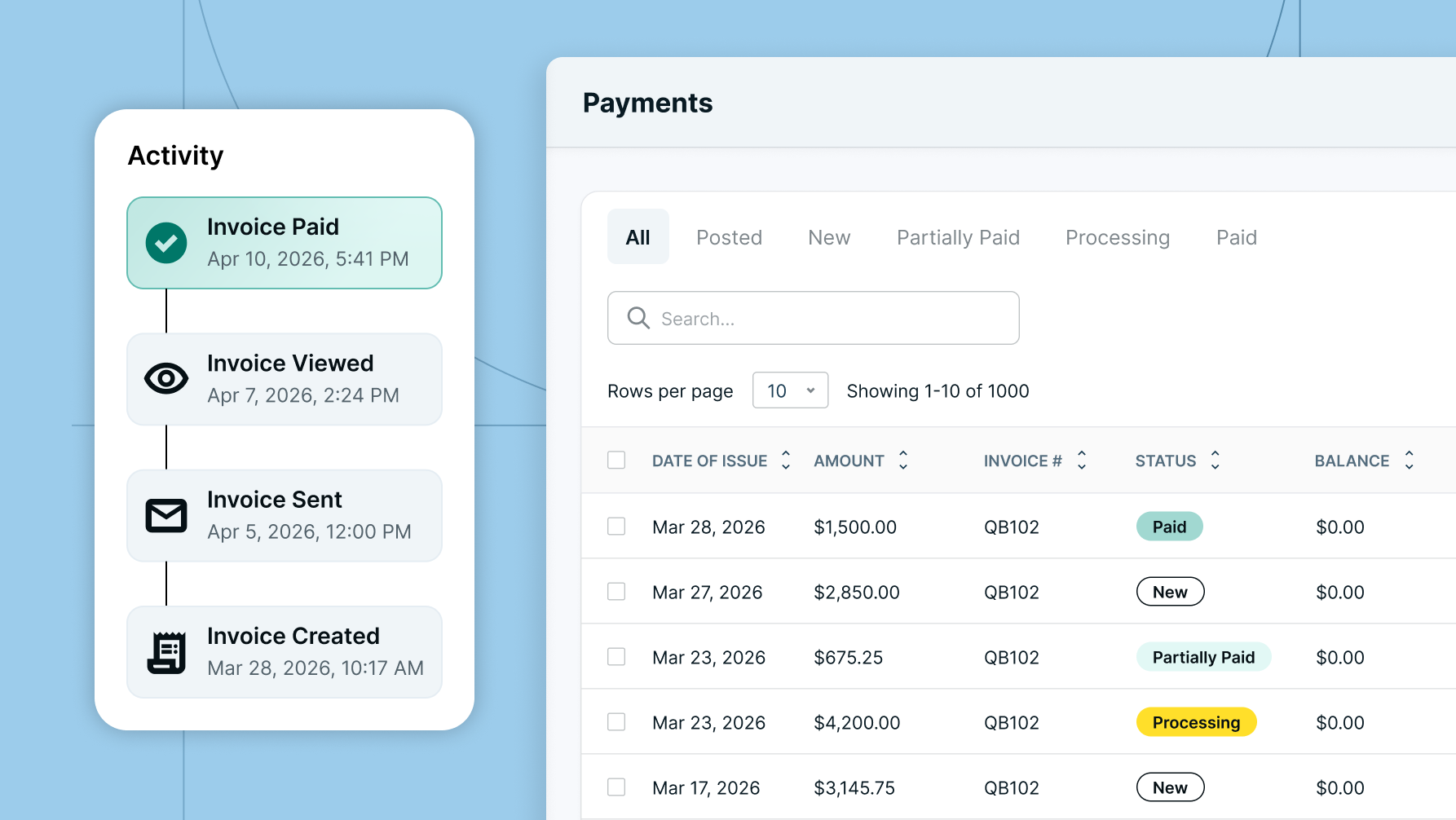
The Microsoft outage on November 12 wasn't a payments problem, but if your invoices, reminders, and receipts ride on Outlook, your billing screeched to a halt . A client can't pay an invoice they didn't get. Neither the bank nor Zelle will show up in your post-mortem, but your DSO will.
The more single points of failure sit between and invoice sent and cash being available, the more often your money gets stuck. Outages make the stuck points more visible.
What to do before the next one
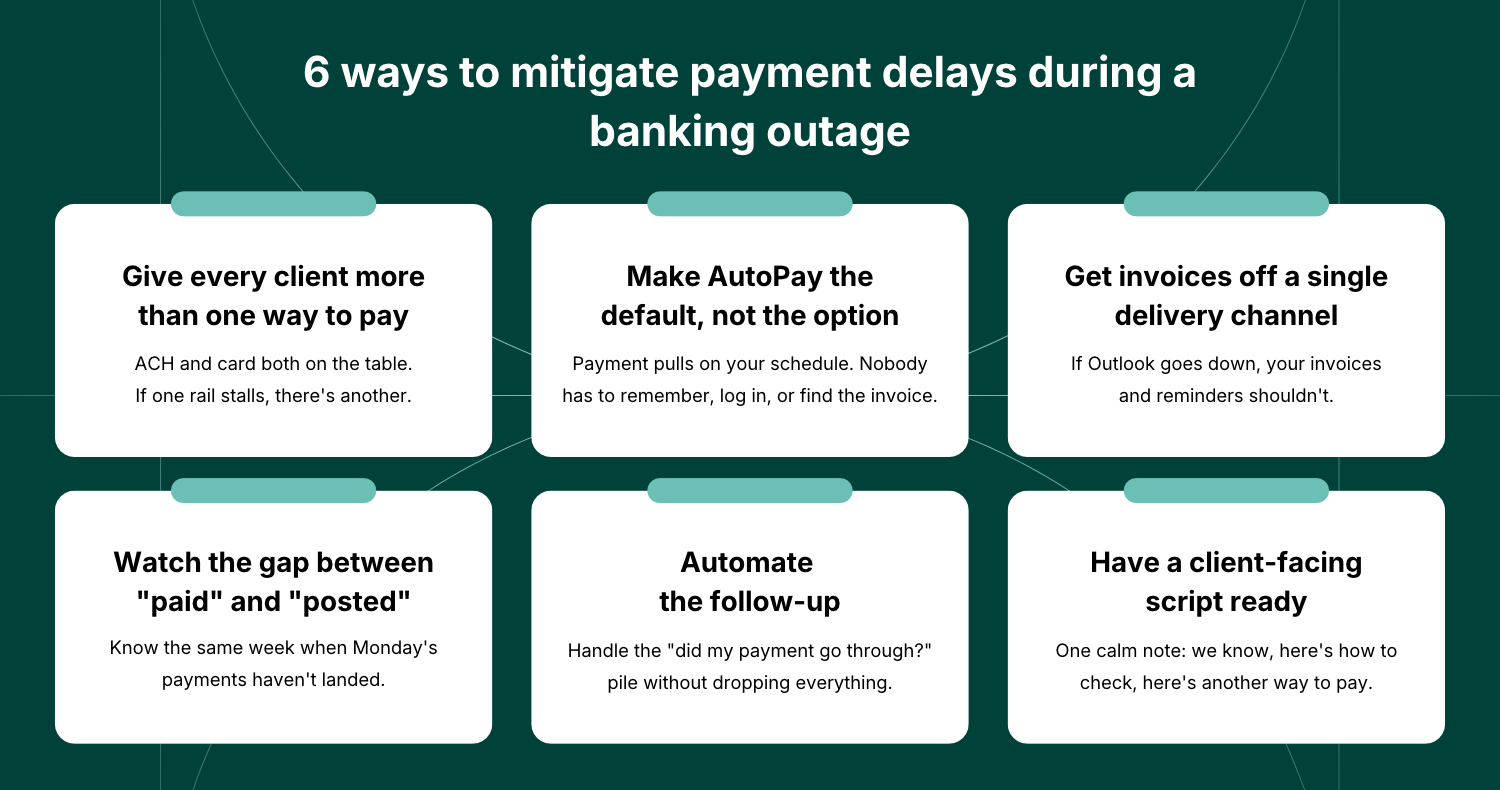
You can't stop Chase from shipping a bug. You can stop one bug from deciding when you get paid. Here's where we'd start.
Give every client more than one way to pay.
ACH and card should both be on the table, with AutoPay as the default. If one rail stalls, the client has another, and you're not waiting on a single bank's recovery timeline.
Make AutoPay the default, not the option.
AutoPay should be a part of your standard operating procedures, point blank. When payment is pulled automatically on your schedule, nobody has to remember, log in, or dig the invoice out of an inbox that's down. A stalled bank becomes a short delay you can see, not a client who forgot to pay. AutoPay is immediate payment that runs itself. Enroll new clients at signup, move existing recurring clients over at renewal, and save Net 30 for project work that needs it.
Get invoice delivery off a single delivery channel.
If Outlook goes down, your invoices shouldn't. Send from your billing platform, give clients a self-service portal, and make sure reminders don't depend on someone's mailbox being up.
Watch the gap between "paid" and "posted."
Reconciliation that runs once a month finds November 16 in December. You want to know the same week that payments initiated on Monday haven't landed, so you can follow up before it turns into a late-payment conversation.
Automate the follow-up.
Manual work is the top internal reason businesses delay their own outgoing payments, per QuickBooks, and 74% of businesses aren't fully automated on bill management. Every outage creates a pile of "did my payment go through?" emails. Automated, consistent follow-up handles that pile without your team dropping everything.
Have a client-facing script ready.
When the next outage hits, send one calm note: we know about the bank issue, here's how to check your payment, here's an alternate way to pay if you need one. Clients remember who made it easy.
None of this is groundbreaking, but the reduction in your mental workload will be noticeable. That's the whole idea behind how we built FlexPoint: billing and payments designed so a bad day at a bank, or at Microsoft, is a footnote in your month instead of the headline.
So, can your clients still pay you?
Probably. Eventually. And "eventually" is exactly the problem.
While there's enough public opinion to go around on how three major failures can happen back-to-back, this is our new reality. It's what modern infrastructure looks like: concentrated, interconnected, and fine until it isn't. The MSPs who shrugged on November 16 will shrug again next time, and they'll find out what it cost at month end. The ones who treat it as a free fire drill will build an AR process with more than one road to the bank.
You already tell your clients not to run their business on a single point of failure. Take your own advice.
Related articles