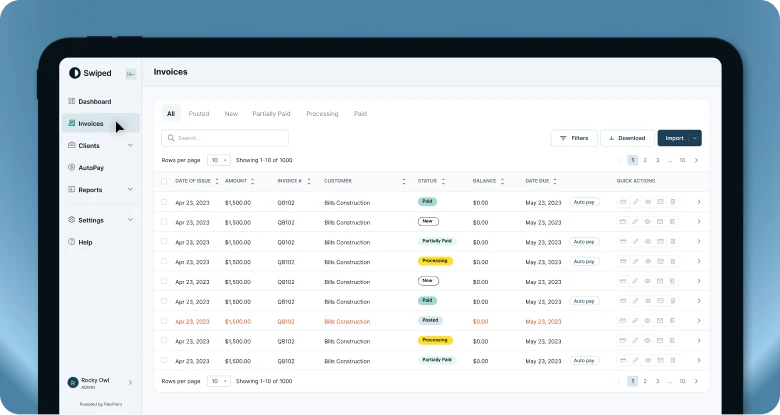


You know the clients.
There are usually two or three of them who need to be reminded every month like clockwork that their invoice has gone unpaid past the due date.
You send a reminder and receive nothing so you send another one. Someone on your team makes a call. They apologize, say they'll handle it, and pay!
You're relieved until next month, when it starts again.
This is the uncomfortable reality for most MSPs. Not only are late payments terrible for cash flow, but they also negatively affect your trust and mutual relationship with your clients.
61% of late payments stem directly from invoice errors or inconsistent follow-up. But even when the invoice is correct and the follow-up is consistent, the cost of that consistency adds up fast.
A billing coordinator spending four hours a month chasing three clients is spending 48 hours a year on work that should not require human attention.
An owner making those calls personally is spending the same time not doing the thing that actually grows the business.
This blog walks through a structured escalation process: a four-step framework for handling late payments from clients, templates for the most common scenarios, and an honest comparison of how to make it run: manually, with generic tools, or with automation built specifically for MSP billing.
Why MSPs Struggle With Late Payments and What Makes It Worse
Late payments are common in professional services.
But MSPs have a few specific dynamics that make the problem more common and more difficult to manage.
Recurring contracts can create billing ambiguity for the clients.
While a one-time invoice feels like a transaction, a monthly managed services invoice feels like a subscription and subscriptions don't create urgency. The natural assumption is that it will sort itself out.
Some clients genuinely don't notice an invoice arrived until someone follows up.
And that's not malicious, it's just how recurring billing gets treated when clients aren't on AutoPay.
And manual follow-up breaks at scale.
When you have 15 clients, chasing two slow payers can be frustrating. But when you have 60 clients, it becomes a part-time job spent in spreadsheets, emails, phone calls, and more.
And even though you want to grow, scaling multiplies the problem if you don't have the right systems in place.
On top of that, most MSP owners and operators are service-oriented.
The instinct is to give clients benefit of the doubt, avoid anything that feels confrontational, and hope the client pays before you have to say something uncomfortable.
In a service-based industry, that instinct is entirely understandable. It stems from the "customer is always right" mentality most people have drilled into them at their first job.
But it also trains clients that late payment has no consequences, which makes the problem worse over time.
A structured escalation framework removes the awkwardness from the equation. That way you're not the one being difficult, the policy is.
A 4-Step Escalation Framework to Handle Late Payments From Clients
This framework is designed to be proactive rather than reactive.
It starts before an invoice is ever late and moves through predictable stages so everyone (your team, your clients, and your billing process) knows exactly what to expect.
Step 1, Prevention: Set the Foundation Before Any Invoice Goes Out
The most effective late payment strategy is the one that stops late payments from happening in the first place.
Three things do most of the work here.
- Net terms in writing. Your service agreement should specify payment terms clearly: Net 15 or Net 30, what constitutes a late payment, and what happens when one occurs. Clients who signed an agreement with clear terms are harder to negotiate with retroactively than clients who were never told what the expectations were.
- AutoPay enrollment at onboarding. Defaulting new clients to AutoPay during the onboarding process removes the payment decision from the equation entirely. Frame it as a convenience for them (no invoices to track, no risk of accidentally paying late) rather than a requirement.
- Invoice confirmation at contract signing. Walk clients through the invoicing process at the start of the relationship. Show them what an invoice will look like, where it will come from, and how to pay. Clients who know what to expect pay faster than those who get their first invoice and have to figure it out.
Prevention is not foolproof.
But for the clients who are late simply out of inattention rather than intent (which is likely most of them), it eliminates the problem before it starts.
Learn more about What Does and Does Not Belong in a Master Service Agreement.
Step 2, Early Reminder: Days 1 to 7 Past Due
The first follow-up after a missed due date should assume positive intent.
The most likely explanation at this stage is that the invoice was overlooked, not that the client is avoiding payment.
Keep this communication short, friendly, and easy to act on. Do not reference consequences at this stage. The goal is to get the invoice paid, not to signal that a relationship is in trouble.
While you are running a professional business, emotions do take part in these kinds of interactions.
Imagine how you would feel after being scolded for making a simple mistake.
Here's an example of how to approach this:
Short, no guilting or shame, and a direct link to pay.
This resolves the majority of late payments from clients who simply missed the notification.
For a deeper dive on how to write effective late payment emails across different scenarios, see our guide on client payment communication.
Step 3, Formal Follow-Up: Days 8 to 30
If the invoice is still unpaid after the initial reminder, the tone does need to shift.
Again, don't introduce hostility into any of your client interactions. But this one should be more businesslike than friendly.
In this communication, reference the contract, state a clear deadline, and introduce the concept of consequences without yet implementing them.
What's changed from Step 2:
- References the contract and net terms explicitly
- Sets a specific payment deadline rather than a general follow-up
- Mentions account standing as a downstream consequence
- Still offers an easy resolution path
If this communication goes unanswered, send a final written notice at day 21 to 25 using the same tone but explicitly stating that service interruption or further action will follow if payment is not received by a specific date.
Step 4, Escalation: 30 or More Days Past Due
At 30+ days, the situation has moved past what email alone can resolve.
You may even want to introduce a phone call earlier depending on what your clients specifically prefer.
This stage though does require direct personal contact, a decision about service continuity, and in the worst case scenario, a path toward collections.
In practice, this stage looks like:
- A direct phone call from you or a senior team member. The call should be short, factual, and end with a clear next step: a payment date, a payment plan, or an explicit acknowledgment that the account is at risk of service interruption.
- A follow up in writing after the call to confirm whatever was discussed. That documentation matters if the situation eventually involves collections.
If the call produces a payment commitment that is not honored, service pause becomes a legitimate consideration.
What to Say When a Client Hasn't Paid an Invoice
The specifics of how you communicate in Steps 2 through 4 depend on the client and the situation.
But a few principles apply across all of them.
- In writing: Lead with the invoice reference and amount, state a clear deadline, make it easy to pay with a direct link, and keep the emotional temperature low. Escalate the formality of the language as the situation escalates, but never make it personal, judgmental, or hostile.
- On a call: State the purpose immediately. "I'm calling about invoice [number] for $[amount], which is [X] days past due." Don't lead with pleasantries that make the subject harder to introduce. Keep it short. End with a specific commitment: a payment date, a next step, or an agreement to discuss a payment plan.
It's also important to tone calibration by client type.
For example, a long-term client who has never been late before warrants a different approach than a newer client with a pattern of slow payment.
Yes, the framework stays the same, but the warmth of the communication adjusts.
This is where an agent-based system becomes powerful: it can calibrate the follow-up sequence based on payment history without requiring you to make that judgment call manually every time.
Manual Follow-Up vs. Automated AR Tools: Which Is Right for Your MSP?
There is no single right answer here.
The right approach depends on your client volume, team capacity, and tolerance for inconsistency.
Here is an honest comparison of the three approaches most MSPs try.
Manual follow-up
This one is obvious: you or someone on your team drafts emails, makes calls, and tracks everything in a spreadsheet or PSA notes.
What works here is you having full control over tone and timing. And it's a strong choice for maintaining nuanced client relationships when the volume is low.
But unfortunately, manual processes lack consistency and don't scale well.
This looks like emails going out late, or not at all, because something else came up. Tracking is imprecise, or someone believes they emailed someone but simply forgot.
On top of that, the emotional labor of making uncomfortable calls can lead to avoidance. At 20+ clients with any meaningful late payment rate, manual follow-up can become a recurring fire in your MSP.
Overall, this is best for MSPs with fewer than 20 clients and a dedicated person who owns the process without interruption.
Generic tools: reminders, PSA alerts, basic email sequences
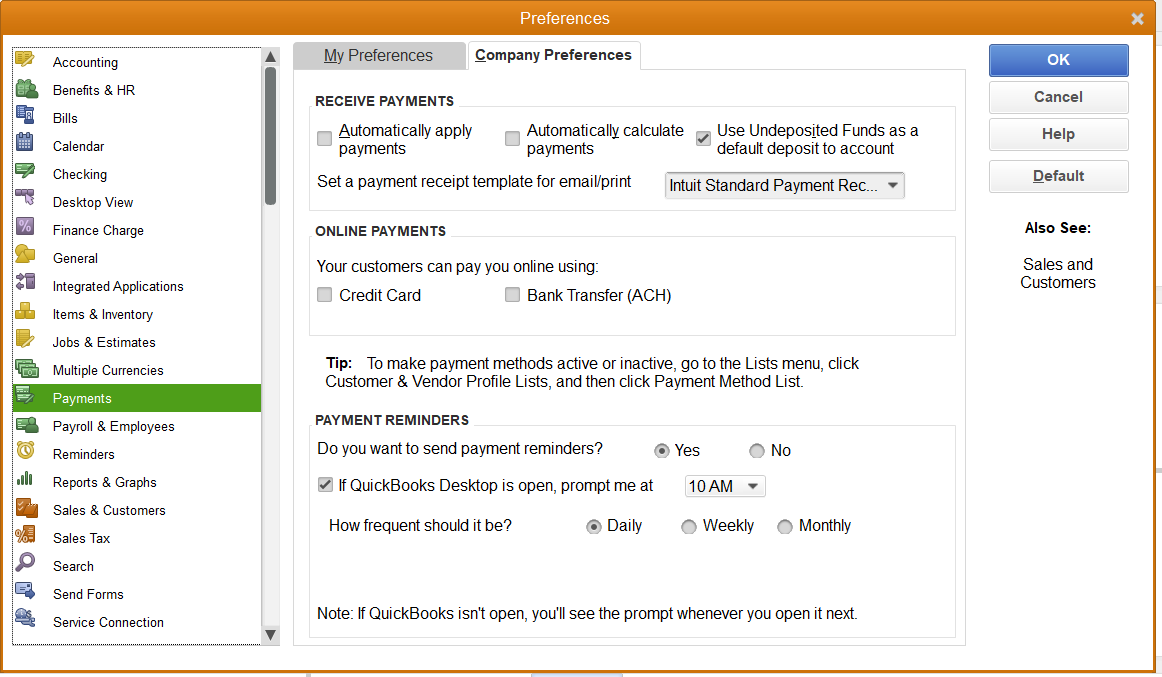
QuickBooks, Xero, and most PSA platforms have some form of invoice reminder or aging alert. These are a great step in the right direction for a iron-clad process.
In this case, automation is handling the basic reminder cadence without requiring manual action.
But generic reminders are not tailored to MSP billing relationships.
They don't know whether a client is a long-term partner or a new account and they don't adjust tone based on payment history.
They generate alerts but don't close the loop, someone still has to act on them.
And they often look exactly like what they are: automated, impersonal, and easy to ignore.
This works for MSPs who want minimal overhead and have a low tolerance for missed payments, but aren't interested in a purpose-built tool.
Purpose-built AR automation and AI agents
The last option is best for every MSP by introducing consistency while also keeping the client relationship top priority.
MSP-specific AR platforms run the entire escalation sequence (email, follow-up, voice contact) based on configurable rules.
They know the difference between a client who has never been late and one with a pattern of 30-day delays. They escalate automatically and pull a human into the process only when a situation requires judgment.
This is consistency at scale, a framework running without anyone specifically having to manage it.
Every client receives the right communication at the right time, every billing cycle, regardless of how many other things are happening in the business.
How FlexPoint AR Agents Work
FlexPoint's AR Agents do exactly what the framework above describes, but autonomously.
Smart follow-up sequences run based on configurable rules: when to send the first reminder, when to escalate tone, when to trigger a voice follow-up.
AI voice calling handles the calls that would otherwise require your team to pick up the phone.
A live AR command center gives you a real-time view of every outstanding balance, every communication sent, and every client status, so you always know where things stand without having to dig for it.
Every capability is opt-in.
Which means that you decide how automated the process runs and at what point a human steps in.
The result is the 4-step escalation framework above, running consistently across your entire client base, without requiring anyone on your team to own the process day-to-day.
When to Consider Pausing Service or Involving Collections
Most late payment situations resolve before reaching this point.
But knowing where the line is (and how to handle it) matters.
When and How to Implement a Service Pause
A service pause is appropriate when a client is more than 30 days past due, has not responded to multiple follow-up attempts, and has made no commitment to pay.
The communication should be factual and professional. State what is happening, when it takes effect, and what the client needs to do to restore service.
Deliver it in writing so there is a clear record.
Done correctly, a service pause is not a relationship-ending action. Most clients who receive a serious notice respond.
The ones who don't were unlikely to pay without one.
Service pauses can even be seen as reasonable to the clients. In any industry, service cannot be provided without payment.
When and How to Involve Collections
Collections are typically only worth considering when a balance exceeds 90 days, is above a minimum threshold (many MSPs use $500 to $1,000 as a floor), and direct communication has been exhausted.
Collections agencies take a percentage (usually 25 to 50% of recovered funds) and the relationship with the client typically does not survive the process.
It is an extreme step to take.
Before involving a collections agency, confirm your documentation: the signed service agreement, every invoice, every written communication, and the record of any verbal commitments.
That paper trail is what makes a collections claim viable.
Once you have been through this process with a client, two things may be worth adding to new agreements going forward: an AutoPay requirement or a shorter net term for clients without an established payment history.
New clients who haven't yet demonstrated reliable payment behavior carry more risk and shorter net terms (Net 15 instead of Net 30) reduce your exposure while the relationship is being established.
The Bottom Line
Late payments from clients are typically a process problem before they're a cash flow problem.
And the MSPs who handle them best are the ones who have a clear framework, not ones who improvise differently every month.
The four-step framework is:
- Prevent late payments at the contract stage
- Follow up early with a friendly reminder
- Escalate formally if the invoice remains unpaid past two weeks
- Move to direct contact and service considerations past 30 days
Each step has a specific communication, a specific tone, and a specific outcome.
Manual follow-up works when the client list is short and relationships are tight. Automation works when consistency and scale matter more than personal touch, which, for most growing MSPs, is most of the time.
FlexPoint's AR Agents run this entire framework autonomously with smart sequences, AI voice follow-up, and a live command center so late payment follow-up stops being something your team manages and starts being something that just happens.
Book an on-demand demo to see how AR Agents handle the follow-up so you don't have to.





.png)