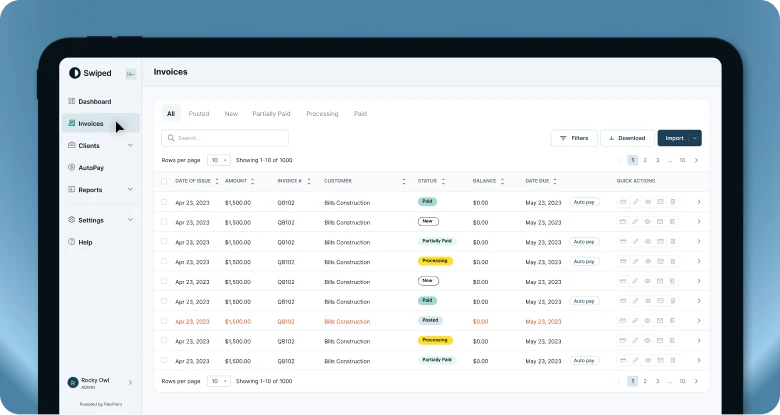



Late payments are a common challenge for Managed Service Providers (MSPs), significantly affecting cash flow, financial stability, and the business's overall health.
According to MSP Insight, 81% of MSPs report not being paid on time, with an average payment delay of 60 days.
This payment challenge can disrupt cash flow, stress resources, and potentially impact the quality of client services.
According to survey respondents, a 2022 PYMNTS report on B2B payment friction found that manual intervention was the primary cause of payment delays and inefficiencies.
Factors such as manual processing, inefficient billing processes, and misaligned payment terms often contribute to these delays, further exacerbating the problem.
Proactively addressing late payments is crucial for MSPs to maintain strong financial health and positive client relationships.
By effectively managing and reducing payment delays, MSPs can ensure smoother operations, improve service delivery, and enhance client satisfaction.
This article explores the common causes of late payments in the MSP industry. It offers actionable strategies and tools to minimize delays, streamline payment processes, and safeguard the financial stability of MSP businesses.
9 Common Causes of Late Payments in MSPs

According to a recent Creditor Watch survey, over 80% of businesses experience the effects of delayed payments.
Identifying the underlying causes of these delays, whether due to invoicing errors, client financial difficulties, or inefficiencies in the payment system, is crucial for MSPs looking to mitigate these issues.
This section analyzes the common factors contributing to late payments in the MSP industry and the effect if not properly managed.
1. Manual Processing
According to Ardent Partners reports, invoice automation is up to 80% faster than manual processing.
Also, according to SKsoft, 64% of businesses cite the lack of automation as a significant challenge, and 16% believe that late payments are caused by slow manual processing.
Manual processing inefficiencies create many issues, from delayed transactions to inconsistent cash flow and elevated administrative workloads.
Traditional approaches, such as manually creating invoices, tracking payments, and following up with clients, are time-intensive and prone to human error.
Mistakes like incorrect billing amounts, missing details, or sending invoices to the wrong contact can disrupt the payment cycle, leading to delays and client dissatisfaction.
For instance, a typo in a client’s billing address or an oversight in payment tracking could result in a delayed or lost invoice, requiring further time and effort to resolve.
2. Client Miscommunication
Billing errors account for 60% of late payments, while 61% of invoices contain at least one error.
For MSPs, unclear or inconsistent communication regarding payment terms, billing cycles, or invoice details often leads to misunderstandings.
To avoid unnecessary delays, you must be more accurate and consistent with contract clauses.
For example, clients might assume greater flexibility if payment deadlines or acceptable methods aren’t clearly outlined during onboarding, leading to unintended late payments.
Such discrepancies can escalate without timely resolution, straining client relationships, disrupting cash flow, and jeopardizing the MSP's financial stability.
Research shows that 94% of B2B customers prefer businesses prioritizing transparency and that 83% appreciate explicit pricing models.
Clients dislike hidden charges and unclear billing practices, often seeking alternative providers when these issues arise.
3. Inadequate Payment Systems
PYMNTS highlights that 48% of businesses attribute failed payments to outdated software.
Reliance on outdated or inadequate payment systems is one of the leading causes of late payments.
These systems often lack more critical features, such as seamless integration with accounting software and other business tools, which create operational bottlenecks.
Also, without integration, processes like invoicing, payment tracking, and reconciliation often require manual input, leading to errors such as incorrect billing amounts or missing client details.
The inefficiencies caused by outdated systems frustrate clients and jeopardize MSPs' financial stability.
Modern, integrated payment systems can address these challenges by streamlining workflows, minimizing errors, and automating essential tasks like reminders and updates.
4. Regulatory Delays
According to MSP Insight, over 20 million businesses are subject to PCI DSS, and MSP Success reports that 72% of MSP clients fail to meet PCI compliance standards.
Regulatory requirements significantly contribute to late payments in the MSP industry.
Compliance with PCI DSS, SAQ-A, GDPR, and HIPAA standards is critical, mainly if you serve clients in regulated industries or across international markets.
Ensuring adherence to these rules often requires additional verification steps, thorough documentation, or audits, which can prolong the payment process.
For example, an MSP working with a healthcare provider might face extended cycles to ensure HIPAA-compliant data handling during transactions. At the same time, global clients may require GDPR-aligned processes that introduce further procedural hurdles.
These regulatory demands can create bottlenecks in invoicing and payment approvals, leading to mismatched or incomplete documentation, revisions, and eventual delays.
5. Cash Flow Issues
According to the U.S. Chamber of Commerce, 82% of small businesses fail due to insufficient cash flow, highlighting how widespread and impactful these struggles can be.
Additionally, 70% of MSP owners express concerns about cash flow issues, recognizing that unreliable cash flow makes it challenging, if not impossible, to meet financial obligations like employee salaries.
When MSPs struggle to manage expenses, deal with seasonal revenue fluctuations, or prioritize their financial obligations, they often delay settling vendor invoices.
These challenges can create a ripple effect, disrupting operational stability and financial planning.
For example, suppose a mid-sized retailer experiencing a seasonal sales slump prioritizes payroll or inventory over IT service payments. In that case, the MSP providing those services may struggle to meet its obligations, such as employee salaries or software costs.
6. Lack of Automated Reminders
A common yet often overlooked cause of late payments for MSPs is the lack of automated reminder systems.
According to data from PYMNTS and American Express, businesses that rely on manual processes take 30% longer to follow up on overdue payments compared to those using automation,
Clients juggling multiple financial responsibilities without timely prompts can easily overlook due invoices, leading to unnecessary payment delays.
These delays can disrupt cash flow, forcing the business to allocate additional time and resources to track and follow up on outstanding payments manually. This can strain client relationships.
Automated reminder systems help mitigate this issue by proactively notifying clients before and after payment deadlines, ensuring invoices remain top-of-mind.
For instance, an MSP providing monthly IT support to a small business can use scheduled notifications to prevent an invoice from getting lost in a cluttered inbox. These notifications reduce the administrative burden on MSPs and minimize the risk of overdue payments caused by client forgetfulness.
According to QuickBooks, 65% of businesses spend an average of 14 hours per week on administrative tasks associated with payment collection.
Implementing automated reminders can significantly improve payment timeliness, streamline cash flow, and allow you to focus resources on growth and service delivery rather than chasing payments.
7. Complex Billing Structures
According to Balance, businesses may take up to 10 days to process an invoice due to paperwork and multiple approval layers.
PYMNTS notes that 34% of B2B buyers cite slow legacy payment systems as a significant challenge.
This complexity is compounded when clients require multiple internal approvals, further slowing down the payment cycle.
One of the primary causes of late payments in the MSP industry is overly complex billing structures.
MSPs typically offer a wide range of services, such as IT support, cloud management, and cybersecurity. Each has a pricing model, such as fixed fees, tiered plans, or usage-based pricing.
While these structures are designed to accommodate diverse client needs, they can sometimes be confusing when invoices are not itemized or charges are challenging to reconcile.
For example, an MSP might issue an invoice combining hourly charges for on-site support, software subscription fees, and usage-based cloud storage costs.
Without clear explanations or breakdowns, the client may question the charges, delaying approvals and payments as they verify the invoice.
If the MSP’s billing system relies on manual processes, errors like duplicate charges or incorrect discounts can further complicate matters. These challenges not only disrupt cash flow but also strain client relationships.
8. Disputed Charges
When clients question the accuracy or validity of an invoice, the payment process is paused until the issue is fully resolved.
According to Sage Network, only 74% of the owed amount is collected if an invoice remains disputed for over 90 days, highlighting the financial risks involved.
Payment disputes often arise from billing errors, vague service descriptions, or differing interpretations of service agreements.
Moreover, according to industry studies, merchant errors account for 20-40% of these disputes, underscoring the need for accurate and transparent invoicing practices.
For instance, clients may dispute charges for additional services they believe were not included in their contract, prompting time-consuming investigations and negotiations.
If disputes are not resolved quickly or efficiently, they can lead to extended payment delays, increased administrative costs, and damage to client relationships.
Sift.com reports that the average cost of handling payment disputes increased by 16% in 2023, further emphasizing the burden these issues place on MSPs.
9. Multiple Payment Channels
A 2023 PYMNTS Intelligence study conducted with Ingo Money found that businesses offering multiple instant payment methods see higher customer satisfaction scores.
Additionally, B2B BNPL specialists report that businesses providing flexible payment arrangements see buyers spend 20% to 40% more on average.
However, for MSPs, the lack of streamlined processes across multiple payment channels such as credit cards, ACH transfers, digital wallets, and checks can lead to significant inefficiencies.
Disconnected systems complicate reconciliation, delaying payment recognition and disrupting cash flow.
For example, an MSP receiving payments from various platforms, such as PayPal, manual checks, and bank transfers, may need help tracking and accurately matching payments to invoices.
This disjointed process often requires manual intervention, which increases administrative workloads and introduces errors that can result in missed or misallocated payments.
Without real-time visibility into incoming funds, you may delay client follow-ups, leaving discrepancies unresolved and further straining financial stability.
Streamlining payment workflows with integrated systems can address these challenges, reducing administrative burden, accelerating payment processing, and ensuring timely cash flow.
9 Proactive Strategies to Mitigate Late Payments
According to a Balance report, nearly 68% of companies receiving more than half of their payments late face cash flow challenges.
Late payments can severely disrupt an MSP's financial stability, affecting operations and growth potential.
This section will examine the strategies you can adopt to ensure timely payment.
1. Automated Invoicing & Payment Solutions
Manual invoicing processes are often time-consuming and error-prone. Research from the Institute of Finance & Management reveals that 12.5% of manual invoices contain errors.
These errors, such as incorrect billing amounts, missed deadlines, or overlooked charges, can create confusion and delay payments, ultimately disrupting cash flow.
A 2022 PYMNTS report on B2B payment friction also identifies manual intervention as a leading cause of payment inefficiencies.
By transitioning to automated invoicing tools, you can ensure accurate, timely, and consistent invoices and reduce the likelihood of delays caused by administrative errors.
More so, Ardent Partners reports that automating invoice processes is up to 80% faster than manual methods.

Automated invoicing systems offer significant advantages in both efficiency and accuracy.
For example, an MSP managing recurring monthly services can set up automated tools to generate and send invoices on a fixed schedule, eliminating delays associated with manual processes.
tekRescue, a Texas-based MSP, scaled its operations, and payment collections and recovery became a problem. The company used QuickBooks for billing and spreadsheets to track payments.
Looking for a more efficient payment system, they came across FlexPoint. They could automate the payment process and send invoices out on time. It also makes it easier to track down payment errors where there is one.
Because of this, they increased accounting efficiency by 75% and saved 20 hours per month on manual labor.

2. Clear Communication
Research shows that 60% of late payments are due to incorrect invoicing, while 70% of businesses experience faster payment cycles when invoices include detailed instructions.
Often, payment delays arise from misunderstandings about terms, billing cycles, or service fees.
However, establishing clear expectations can eliminate confusion and ensure clients understand precisely when and how payments should be made.
This reduces the likelihood of delays caused by oversights or miscommunication.
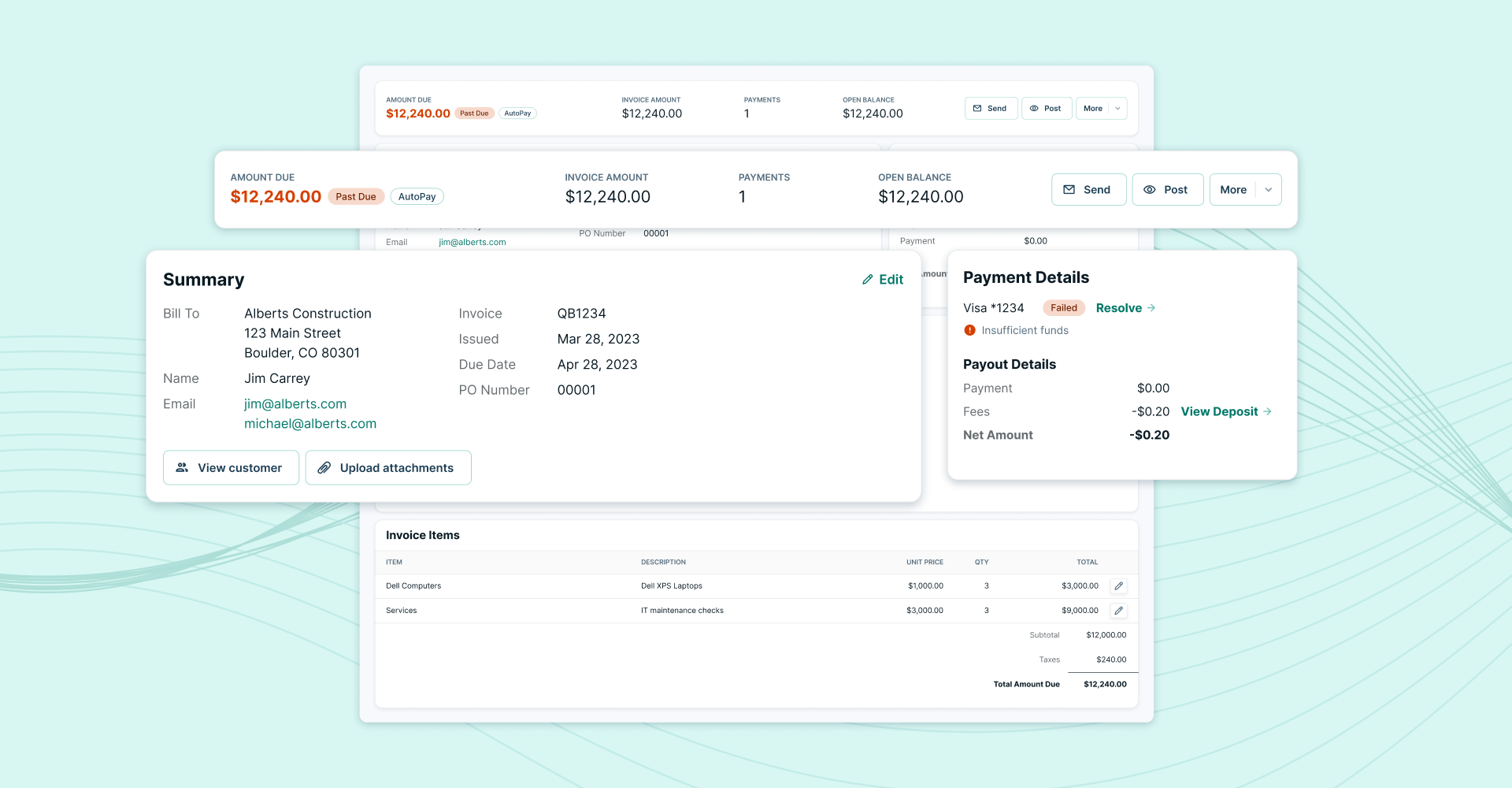
For instance, an MSP providing monthly IT services might need to specify payment due dates in contracts or invoices, leaving clients unaware that payments are expected by the 15th of each month.
This oversight can lead to delays and strained relationships.
Moreover, you can set clear expectations by outlining payment terms, including due dates, accepted methods, and late fees upfront and reinforcing them in contracts, emails, and invoices.
3. Integrated Payment Systems
When billing processes across siloed tools are managed independently, they often result in inefficiencies, errors, and delays.
Streamlining these functions into a single platform can enhance accuracy, improve payment tracking, and reduce the likelihood of late payments.
For example, an MSP using separate software for invoicing, payment collection, and accounting might struggle to track payment statuses, leading to missed follow-ups and reconciliation issues.
Switching to an integrated solution like FlexPoint provides real-time visibility into the entire payment lifecycle. FlexPoint integrates with accounting tools like QuickBooks Online, QuickBooks Desktop, and Xero. In addition, FlexPoint also integrates with PSA software such as ConnectWise and SuperOps.
When a client pays, the system automatically updates accounting records and marks the invoice as settled, eliminating manual data entry and reducing human error.
For example, WJP Technology Consultants, a Texas-based MSP, used a costly payment provider with many limitations, such as a lack of integration.
Bill Perkins, President & CEO, saw the need to change their payment provider to one that can automate invoices to save both the MSP and their clients time spent on manual processing.
Thus, they moved to FlexPoint because of its capacity to integrate with other business tools like Quickbooks.
As a result, they increased payment speed by 3x and increased the number of clients using auto-pay by 30 percent.

4. Digital Payment Options
According to AFP’s 2022 Digital Payments Survey, the transition from paper checks to digital payments has transformed the B2B landscape, with 73% of organizations shifting to electronic payments to enhance efficiency.
Adopting digital payment methods like credit cards, e-wallets, and online transfers can leverage these tools to expedite transactions and reduce Days Sales Outstanding (DSO), with studies showing electronic payments can lower DSO by up to 30%.

Moreover, digital payment systems simplify overdue payment management through automated reminders and alerts, encouraging clients to pay on time.
Consider an MSP that previously relied on manual systems for invoicing, payment processing, and accounting.
This payment method often required manual entry, email follow-ups, and separate tracking in accounting software, which led to reconciliation delays and overdue payments.
Traditional payment methods like checks compounded these delays, extending processing times unnecessarily.
5. Streamlined Billing
An MSTS report on B2B payment preferences revealed that 57% of buyers abandon transactions when the checkout process is too lengthy.
Similarly, data from Zuora indicates that 39% of clients switch to competitors due to hidden fees.
A key strategy for reducing late payments in the industry is simplifying billing structures to ensure clarity and transparency.
Complex, disjointed, or unclear invoices often lead to client confusion, disputes, and payment delays.
When clients need help understanding charges, reconciling them with services received, or navigating cumbersome payment terms, they may defer payment or even abandon it entirely.
For instance, Dega Systems, a New York-based MSP, services small businesses and non-profit organizations.
They were using QuickBooks, but it has shortcomings. Their clients can’t access their invoices, which is cumbersome for their type of clients.
To address this, they moved to a simplified payment system with a client portal that allows clients to view all their invoices. This feature helps Dega Systems reduce the time spent on invoice inquiries.
As a result, they saved 36 hours annually on invoice management and increased the number of clients using Autopay by 10%.

6. Proactive Dispute Management
In 2023, U.S. consumers disputed an estimated $65 billion in credit card charges, with the average dispute cost increasing by 16%.
According to Mastercard, each dispute incurs additional costs ranging from $15 to $70, impacting card-issuing banks and merchants.
Disputes over invoices or charges can significantly delay payments, disrupt cash flow, and strain client relationships. Addressing disputes proactively is critical to reducing these financial and operational challenges.
To mitigate payment delays caused by disputes, you should implement a robust dispute management system emphasizing clarity, communication, and swift resolution.
This process begins with transparent billing practices clearly outlining services rendered, associated costs, and terms in every invoice to prevent confusion or misinterpretation.
Establishing dedicated channels for dispute resolution, such as a specific contact person or department, ensures that clients can raise concerns quickly and receive prompt responses.
7. Flexible Payment Terms
According to a CapChase survey of 500 U.S.-based B2B leaders, 81.2% noted that the inability to offer flexible payment options hinders deal closures.
Similarly, Hokodo reports that 86% of B2B customers choose vendors based on payment terms, with 83% abandoning purchases when their preferred option isn’t available.
Offering flexible payment terms such as installment plans, extended due dates, or custom billing cycles can be a competitive advantage, fostering client satisfaction and loyalty.

However, without proper management, these arrangements can contribute to late payments, as clients may lose track of schedules or assume leniency in adhering to agreed terms.
For example, Pileus Technologies, a Kansas-based MSP, provides IT and other related services. However, the initial investment for these services often makes it challenging for many clients to pay the full bill upfront.
John Douglass, the MSP’s President, noticed this and intended to offer a financing option. However, he didn’t want to overhaul his finance stack, and their previous payment provider couldn’t provide this financial service.
Given this, they moved to FlexPoint, a payment processor offering an alternative payment solution for price-sensitive clients who can pay upfront.
As a result, they increased new customer acquisition by 5% who are interested in the financing option.

8. Client Education
According to the U.S. Chamber of Commerce, providing detailed payment instructions on invoices improves payment times for 70% of businesses.
Client education is a key strategy for minimizing late payments. Many clients may not fully understand the payment terms, processes, or the financial impact of delays on your operations.
Educating clients on these aspects can foster greater awareness and collaboration, reduce misunderstandings, and ensure a smoother payment process.
For instance, you can include comprehensive payment instructions on every invoice, clearly outlining due dates, accepted payment methods, and applicable late fees.
Additionally, providing user-friendly guides or tutorials for navigating payment portals can make the process more intuitive for clients.
Regular communication, such as reminder emails or updates on payment policies, further reinforces these expectations and helps clients plan their payments more effectively.
9. Regular Follow-Ups
According to PYMNTS, companies with manual payment processes spend 67% more time following up on overdue payments, underscoring the importance of an effective follow-up system.
Consistent and proactive follow-ups are a critical strategy for minimizing late payments, particularly for clients with a history of delays.
Overdue invoices can be overlooked without regular reminders, disrupting cash flow and creating additional administrative burdens.
By implementing structured and timely follow-up processes, you can encourage prompt payments while maintaining positive client relationships.
For example, an MSP can leverage automated systems to send reminders a few days before an invoice is due and follow-up notices shortly after the due date.
These reminders can be customized based on your client’s payment history, ensuring habitual late payers receive better yet professional notifications.
For instance, Excellent Networks, an El Paso-based MSP, sent invoices through ConnectWise and collected payments using checks. Customers who pay using the card manually process the card through QuickBooks.
Given this, they spent a lot of time on tasks that could be automated. Thus, Mark Luna, President at Excellent Networks, sought to streamline the payment process using an automated payment system like FlexPoint.
Using FlexPoint, they could use the auto reminder feature to remind current and overdue payments.
With this, they increased payment speed by over 80% and saved over 24 hours per year on manual processing.

Conclusion: Optimizing Cash Flow Through Effective Payment Management
This article explains how late payments are a significant challenge for MSPs, often caused by manual processes, miscommunication, outdated systems, and complex billing structures.
However, implementing automated invoicing, integrated payment systems, clear communication, and client education can streamline payment processes, reduce delays, and enhance financial stability.
From adopting advanced payment tools like FlexPoint, which streamlines invoicing and collections, to maintaining consistent client communication, these tactics are proven to reduce late payments and enhance operational efficiency.
Proactively managing payment cycles and educating clients on payment expectations can create a more predictable revenue stream and foster stronger client relationships.
FlexPoint offers a comprehensive solution that simplifies payment management and reduces payment.

For Example, Net-Tech Consulting, a Texas-based MSP, was experiencing late payments because they were manually chasing and collecting checks from clients. It sometimes took months for the MSP to receive these checks.
As a result, they were spending about 60 hours per year sending and tracking invoices.
Net-Tech Consulting’s President Zachary Kinder knew this was a waste of productive hours. Hence, he sought a better payment solution to automate their payment process.
They moved to FlexPoint, which eliminated friction in payment and allowed their clients to pay electronically. The clients could view all their bills on their payment portal.
As a result, they increased invoicing speed by 80% and achieved 20 days faster payment.
Enhance your MSP's financial operations and reduce late payments with FlexPoint.
Discover our advanced payment solutions designed to streamline your financial processes.
Visit our website or contact us today to learn more about how we can help you improve your payment efficiency and client relations.