
Top MSP Expense Categorization Mistakes and How to Fix Them



%20(1)%20(1).jpg)
Proper expense categorization might not sound glamorous, but it’s one of the most important behind-the-scenes drivers of cash flow, tax outcomes, and long-term growth planning for MSPs. Every misclassified cost (whether it’s a license, labor entry, or purchase) can quietly erode margins, distort profitability, mislead stakeholders, and in worst-case scenarios, trigger an audit.
But understanding how to categorize expenses correctly is far beyond an accounting exercise, it is also a strategic tool that reveals the true economics of your business and provides the clarity needed to make confident pricing, staffing, and investment decisions.
In this post, we’ll dive into the most common expense misclassifications MSPs make, explore why they matter for your bottom line, and provide practical steps to fix them so your financial reporting reflects reality and supports sustainable growth.
If you need more insight into Common Financial Challenges for MSPs, watch our full webinar.
{{toc}}
Why Expense Categorization Matters for MSP Profitability
Expense categorization is the process of assigning every cost your MSP incurs to the accounting categories that most accurately reflect their purpose and impact. Done well, it supports accurate financial reporting, cost of goods sold (COGS) breakdowns, strong gross margins, and a reliable (profit and loss) P&L statement. But if done poorly, it obscures visibility, hides profitability leaks, and can trigger tax issues or audits.
For MSPs, the challenge is particularly acute because your cost structure includes:
- Subscription and licensing costs that may be passed through to clients
- Tools and platforms used internally versus delivered to customers
- Labor and technician time applied unevenly across service types
- Hardware purchases that may be capitalized or expensed
- Bundled services where multiple deliverables are wrapped into a single contract.
If expenses aren’t categorized with discipline and context, your financial reports can look rosy or dire for the wrong reasons. A real-world example would be believing your profitability is strong when an entire category of costs has been buried in a vague “miscellaneous” bucket. Or you might think your taxes are optimized when deductions were misapplied. Both scenarios create real financial risk and strategic confusion.
A business where the P&L doesn’t match the way services are delivered and measured is a business operating in the dark. It’s not an uncommon occurrence and even well-meaning MSPs could fall into this trap.
Common MSP Expense Misclassifications and Why They Happen
Some of the most common mistakes that service-providers make when misclassifying expenses are:
1. Recording licensing and tool subscriptions wrong
Software subscriptions may seem like generic operating costs, but they serve different purposes depending on whether they are resold to clients, bundled into service delivery, or used internally. For example, vendor licenses such as Pax8 subscriptions, Microsoft 365 seats, security stacks, or cloud services delivered as part of an agreement generally belong in Cost of Goods Sold (COGS), because they directly support revenue generation.
On the other hand, internal systems like accounting tools, PSA administration tools, HR platforms, or marketing software should be categorized as operating expenses. When these categories are mixed, gross margin calculations become inaccurate, managed services profitability looks misleading, and leaders lose visibility into the true cost to deliver services.
2. Mislabeling capital purchases as current expenses (or vice versa)
Many MSPs blur the line between what should be treated as an operating expense and what qualifies as a capital expenditure. Large internal hardware investments, infrastructure upgrades, server purchases, networking equipment, or significant internal software development often meet capitalization criteria and should be depreciated over time rather than expensed immediately. When these are incorrectly recorded as short-term expenses, financial statements can show artificially low profit for that period or distort EBITDA.
The opposite problem is just as damaging. Treating smaller or short-term costs as capital expenses when they shouldn’t be can inflate asset value, misstate depreciation schedules, and complicate tax filings. Over time, misclassification here can create compliance risk and make it harder to understand the real cost of running the business.
3. Lumping mixed costs
A big categorization mistake MSPs make is treating bundled or mixed-use costs as a single expense instead of allocating them correctly. This often happens with vendor bundles, platform packages, tool stacks, and shared infrastructure where different components belong in different GL buckets. Some portions may be true COGS tied to client delivery, others should be categorized as operating expenses, and in some cases, certain elements may even qualify as capital assets.
When everything gets lumped into a single generic expense bucket, financial accuracy breaks quickly. Gross margins become unreliable, and true service-line profitability disappears. In other words, poor allocation isn’t a small bookkeeping issue, it’s a misclassification problem that leads directly to bad financial decisions.
4. Treating recurring services inconsistently
Recurring services are the backbone of MSP revenue, but they also introduce one of the easiest places to misclassify expenses and revenue timing.
Many MSPs still record recurring revenue as soon as it is billed while recognizing associated expenses whenever invoices hit, which creates mismatches between income and cost. Without disciplined deferred revenue tracking and consistent timing alignment, financial statements will swing artificially, showing inflated profit in one period and suppressed profit in another. This becomes especially critical under ASC 606 revenue recognition standards, which require clear documentation of performance obligations and alignment between delivery and recognition. Inconsistent treatment doesn’t just distort profitability; it also complicates forecasting, valuation conversations, lender relationships, and potential acquisition readiness.
5. Ignoring labor costs in service delivery
Another major misclassification issue is where MSPs place their labor costs. Many categorize technician salaries, engineering time, and service desk labor strictly as general operating expenses, instead of tying them appropriately to service delivery when they directly support revenue.
When that happens, gross margin looks artificially high, and service profitability appears healthier than it actually is. For managed services, break/fix, and project work, labor is not just overhead, it is often the single largest cost of delivery. If it isn’t classified correctly, leaders cannot see which services are profitable, which clients are underwater, or whether their pricing model is actually viable. This is one of the biggest reasons MSPs feel profitable while cash flow says otherwise. Accurate mapping of labor to agreements, tickets, and client workload (supported by better billing and financial systems like FlexPoint) helps MSPs see their real economics and make smarter decisions.
These mistakes may arise from software limitations, lack of accounting expertise specific to MSPs, or simply the absence of formalized categorization policies. But over time, they accumulate into financial statements that don’t match operational reality.
How Misclassification Impacts MSP Cash Flow and Profit Margins
Expense misclassification has real financial consequences for MSPs. When costs land in the wrong categories, margins look better (or worse) than they actually are, the business loses visibility into where money is really going, and leadership ends up making decisions based on distorted data. That’s how you wind up with pricing that doesn’t reflect true delivery cost, a P&L that hides problem areas, or cash flow pressure that feels “mysterious” when it really isn’t. Overall, poor expense classification:
- Distorts gross margin visibility.
If COGS includes only direct hardware costs and omits related labor and tool usage, gross margins appear artificially high. Conversely, treating strategic expenditures like software development as routine expenses can suppress margins and obscure where profitability truly lies. - Complicates pricing decisions.
Without accurate cost allocation, you cannot confidently set per-user or per-device pricing, structure managed services agreements, or evaluate whether rate increases are justified. Inaccurate financial data often leads MSPs to undercharge or mis-price service offerings. - Impairs cash flow forecasting.
When expenses are misclassified, deferred revenue isn’t tracked correctly, and billing timing doesn’t align with delivery, cash flow forecasts are unreliable. This hampers planning for growth, hiring, and investment. - Increases audit risk and compliance costs.
Inconsistent categorization is one of the top red flags auditors look for, because inconsistency signals weak internal controls. Simple accounting category mismatches, such as coding a subscription as “office supplies” one month and “IT hardware” the next, can trigger deeper scrutiny. - Leads to tax inefficiencies.
Misclassification can alter your tax liability significantly. For instance, incorrectly deducting capital purchases or failing to allocate deferred revenue properly may result in penalties, increased tax owed, or lost deductions. If you want to learn more about how to approach taxes, watch our New Year Tax Law Changes webinar!
Clearly defined category practices and real alignment with accounting standards are not optional for MSPs serious about sustainable profitability.
Best Practices for MSP Expense Categorization
Correcting categorizations and preventing future errors requires concrete practices.
Standardize Your Chart of Accounts Around Your MSP Business Model
Your chart of accounts should reflect the way services are delivered and invoiced in terms of revenue and expense. That means having clear categories for:
- Cost of Goods Sold (COGS) tied directly to client deliverables
- Managed services delivery costs
- Professional services and project costs
- Subscriptions and licensing (both internal and client-facing)
- Capital assets and depreciation schedules
Avoid catch-all categories like “miscellaneous.” If an expense does not clearly fit a logical financial bucket, it should be reviewed by someone who understands both your services and your accounting framework.
If you want to learn more about how to improve your chart of accounts, read Where MSP Chart of Accounts Goes Wrong.
Document and Automate Allocation Rules
Simple internal documentation on how to classify recurring costs creates consistency. If you regularly purchase bundled tools or licenses, have clear rules for splitting them into their appropriate accounts. An automated system that applies those rules reduces manual error over time.
Many MSPs find that automating integration between PSA platforms (which track labor and delivery) and accounting systems (which record expenses) creates a much stronger categorization environment. Without direct integration, manual exports and re-entry are notoriously error-prone.
Work with an MSP-Savvy Accountant
Generic CPAs often lack experience with MSP revenue models, recurring billing nuances, and service delivery cost structures. An accounting partner familiar with MSP challenges can help you structure deferred revenue, align expense categories with revenue recognition standards, and advise on tax optimization. If you’re not sure where to find one, we have an Accounting Guide full of MSP finance experts available to help you categorize your expenses and revenue correctly.
Reconcile Regularly
Reconciliation shouldn’t happen only at year-end. Monthly reviews of expense categories against invoices, service logs, and cost centers catch errors before they distort financial statements for extended periods.
Strategy Beyond MSP Expense Categorization
Once you’ve stabilized category accuracy, you can use your financial data strategically, not just diagnostically.
When expense data is clean, you can analyze margins by:
- Service type (managed services vs break/fix vs projects)
- Client segment (small business vs mid-market)
- Tool stack (which platforms deliver the best ROI)
- Labor contributions (which techs generate profitable hours vs drains)
That kind of granularity is essential if you want to price services accurately, evaluate packaging strategies, and decide where to invest in automation or staffing.
For example, linking labor costs directly to service delivery costs helps determine whether your per-endpoint managed services pricing supports your expected margin, or whether break/fix work is subsidizing recurring revenue. This type of insight becomes possible only when expenses are categorized consistently and transparently.
Improve Your MSP’s Financial Operations To Unlock Profitability
Expense categorization is only one piece of a healthy MSP financial framework. Its value is amplified when it’s supported by integrated systems and disciplined workflows that synchronize PSA data with accounting, automate invoice generation and payment reconciliation, prevent drift between billing and service delivery, and provide leaders with accurate P&Ls and service-line margins. Without these connections, categorization becomes a manual, error-prone chore, and financial insight remains unreliable. Spreadsheets alone cannot solve delayed payments, hidden costs, or cash flow uncertainty.
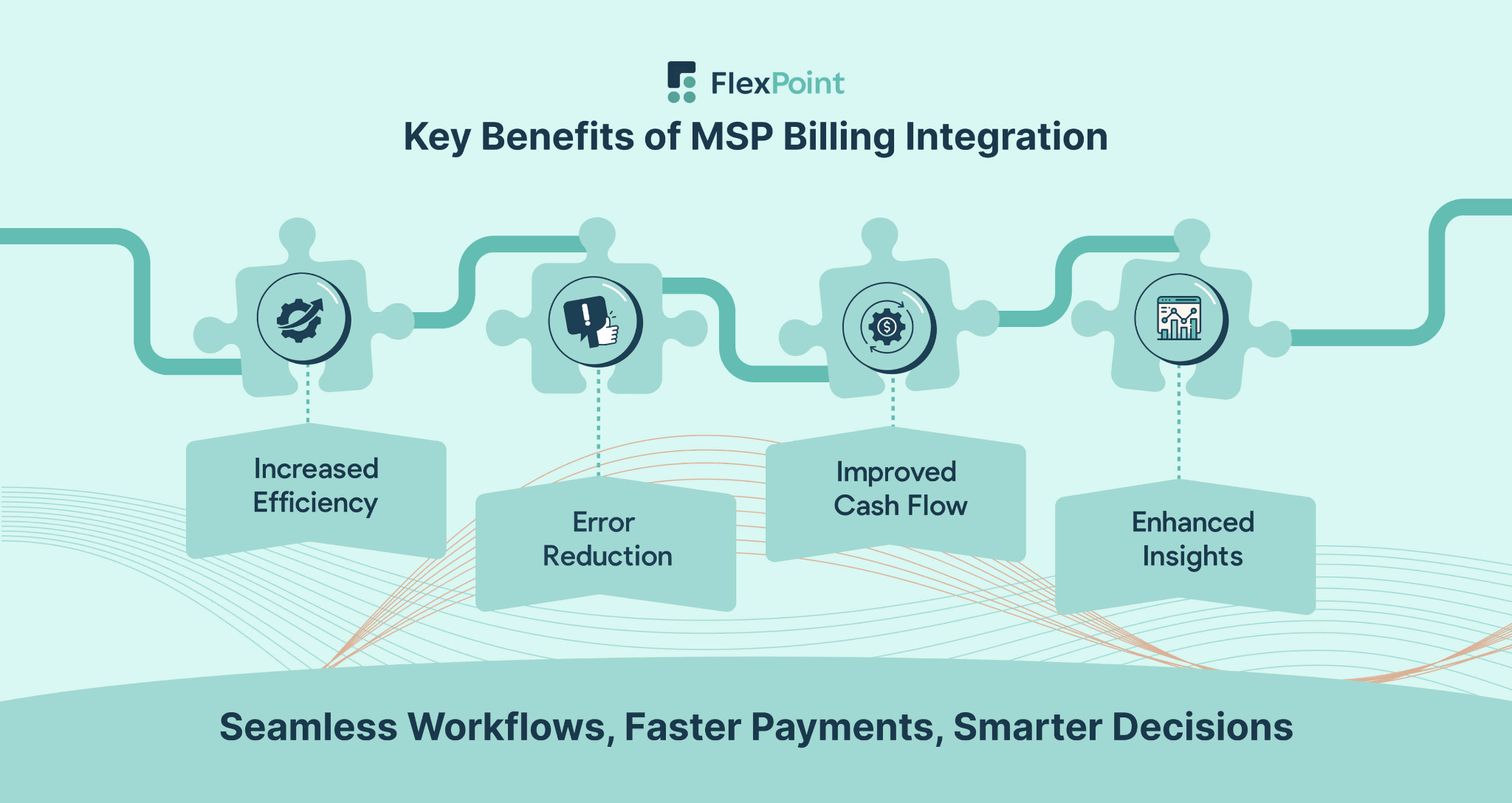
When MSPs treat expense categorization as an operational priority within a connected financial system, the impact is immediate and tangible. You gain clear visibility into true service costs, margin performance, pricing accuracy, and overall profitability. Structured charts of accounts, documented allocation rules, automated integrations, and guidance from MSP-savvy accountants ensure that your books reflect operational reality rather than guesswork.
If your team is still struggling with fragmented workflows, unclear margins, or inconsistent categorization, it’s a sign that your financial operations aren’t aligned with growth objectives. Tools and platforms designed specifically for MSPs can connect billing, delivery, accounting, and payments, transforming financial management from reactive to proactive. For actionable strategies and practical guidance, explore our Common Financial Challenges for MSPs webinar, where we break down key pitfalls and show how to build predictable, profitable financial operations that scale.
FAQs
What are the most common expense misclassification mistakes MSPs make?
Most MSPs misclassify software subscriptions, capital purchases, labor costs, bundled vendor expenses, and recurring service costs, which distorts profitability and financial transparency.
How does misclassifying expenses affect MSP profitability?
Misclassification inflates or understates margins, leading to inaccurate pricing decisions, misleading P&Ls, and reduced business confidence.
Why is categorizing MSP software and licensing costs correctly so important?
Internal tools and client-deliverable tools belong in different accounting buckets, incorrect categorization can destroy true COGS visibility and skew gross margins.
What happens when MSPs expense capital purchases incorrectly?
Incorrectly expensing or capitalizing assets impacts EBITDA, taxes, depreciation schedules, and can trigger compliance or audit concerns.
Why is labor expense misclassification so damaging for MSPs?
If technician labor isn’t properly aligned to service delivery, gross margin becomes meaningless and leadership loses visibility into which services actually make money.
How can MSPs fix expense categorization problems long-term?
The solution is building a structured chart of accounts, documenting categorization rules, automating PSA-to-accounting workflows, and using platforms like FlexPoint to keep financial data accurate and aligned.
.png)


