

U.S. bank holidays have a sneaky way of disrupting cash flow, payroll, and client payments, especially for MSPs juggling multiple clients, billing cycles, and vendors. Somehow just one missed processing day always seems to delay revenue, cause awkward client conversations, and unnecessary fire drills for your finance or ops team.
And the frustrating part? These disruptions are rarely about bad planning or mistakes. They’re usually just the reality of how banking systems work in the United States.
This guide is designed to make bank holidays simple. We’ll walk through every U.S. bank holiday in chronological order and share easy, realistic ways to stay ahead, without getting lost in the weeds or over-engineering your billing process.
Why Bank Holidays Matter for MSPs
If your business relies on ACH payments, client autopay, payroll runs, or regular vendor payouts, bank holidays quietly affect all of it. When banks close for a federal holiday, the systems that move money between accounts pause too: ACH payments don’t process, deposits don’t land, and withdrawals don’t go out until the next business day.
That delay might seem minor on paper, but in practice it adds friction. A payment you expected on Monday shows up Tuesday. Payroll timing gets tighter. Vendor payments shift. Clients ask why their payment didn’t go through when “everything was set up correctly.”
For MSPs operating on predictable monthly revenue or thin margins, even a one-day delay can ripple. And when holidays stack up (especially around summer or year-end) those delays tend to snowball.
The key thing to understand is that bank holidays are simply a built-in part of the financial calendar. MSPs that plan around them with the right payment systems experience fewer surprises, fewer awkward conversations, and far less manual cleanup.
All U.S. Bank Holidays
Here are the federal bank holidays for 2026. On these days, the Federal Reserve is closed, which means ACH payments, wire transfers, and check clearing won’t settle until the next business day. These holidays apply to most banks and credit unions nationwide and should be factored into your financial operations:
1. New Year’s Day: Thursday, January 1, 2026
New Year’s Day is a fixed holiday that always falls on January 1. In 2026, it lands on a Thursday. Because it comes right after year-end close, this is one of the most sensitive banking pauses of the year. Any payments initiated on January 1 won’t begin processing until Friday, January 2. For MSPs and finance teams, this is a good reminder to wrap up year-end reconciliations and schedule critical payments before December 31. Avoid starting the new year behind on vendor payments or payroll timing.
2. Martin Luther King Jr. Day: Monday, January 19, 2026
MLK Day is observed on the third Monday of January each year. In 2026, banks will be closed on Monday, January 19. Because this creates a three-day weekend, payment files submitted late Friday may not settle until Tuesday. If you process recurring mid-month billing or vendor payments, aim to send those files by Thursday or early Friday to avoid bottlenecks when banking operations resume.
3. Presidents’ Day: Monday, February 16, 2026
Presidents’ Day falls on the third Monday in February, which in 2026 is February 16. Like MLK Day, this creates a long weekend pause in settlement activity. Mid-February is often a busy billing period for MSPs, especially those running monthly contracts that renew around the 15th. Plan ahead by initiating ACH drafts and outbound payments before the holiday weekend to prevent cash flow timing surprises.
4. Memorial Day: Monday, May 25, 2026
Memorial Day is observed on the last Monday of May, landing on May 25 in 2026. This holiday frequently impacts payroll schedules and end-of-month processing cycles. Because it occurs so close to month-end, it’s wise to accelerate any large outgoing payments or collections earlier in the week. If you rely on weekly billing runs, adjust submission timing to ensure funds settle before the long weekend.
5. Juneteenth National Independence Day: Friday, June 19, 2026
Juneteenth is observed annually on June 19, and in 2026 it falls on a Friday. A Friday closure extends processing delays through the weekend, meaning transactions initiated that day may not settle until Monday. For teams managing recurring collections or client billing near the 20th of the month, it’s best to initiate transfers on Thursday, June 18 to maintain predictable cash flow.
6. Independence Day (Observed): Friday, July 3, 2026
Independence Day is July 4 each year, but in 2026 it falls on a Saturday. As a result, banks will observe the holiday on Friday, July 3. This is an important one to watch because it effectively extends into a three-day weekend. Early July often overlaps with quarterly reporting and new month payment runs, so be sure to submit ACH files and wire transfers before the Friday closure to avoid settlement pushing into the following week.
7. Labor Day: Monday, September 7, 2026
Labor Day is observed on the first Monday in September, which in 2026 is September 7. While early September can feel slower operationally, banking systems will be fully closed for the day. If you run beginning-of-month billing cycles, account for the delay and ensure invoices or payment drafts are initiated the prior week to keep collections on schedule.
8. Columbus Day/Indigenous Peoples’ Day: Monday, October 12, 2026
This holiday falls on the second Monday in October and lands on October 12 in 2026. While not every private business closes, banks and Federal Reserve systems do. If your organization submits batch payments or relies on automated settlements, double-check timing for the surrounding days. It’s a quieter holiday, but it can still disrupt predictable processing timelines.
9. Veterans’ Day: Wednesday, November 11, 2026
Veterans Day is a fixed-date holiday observed annually on November 11. In 2026, it falls midweek on a Wednesday. Unlike Monday holidays, midweek closures can interrupt recurring Wednesday payment schedules. If you typically initiate payroll or vendor payments midweek, plan to move those submissions to Tuesday to ensure timely settlement.
10. Thanksgiving Day: Thursday, November 26, 2026
Thanksgiving falls on the fourth Thursday in November, which in 2026 is November 26. Banks will be closed on Thursday, and while they reopen Friday, many businesses operate with reduced staff. Because this sits in the heart of Q4, it’s wise to treat Thanksgiving week as a low-velocity banking window. Schedule large transfers and billing runs earlier in the week to avoid end-of-month compression.
11. Christmas Day: Friday, December 25, 2026
Christmas Day is a fixed holiday observed on December 25, which in 2026 falls on a Friday. This creates another long weekend pause during a critical financial period. Late-December cash flow, year-end reporting, and final payroll runs can all be affected. To reduce stress, finalize December billing and vendor payments before December 24 so settlement delays don’t spill into the final days of the year.
How MSPs Stay Ahead of Bank Holidays with Payment Automation
Bank holidays don’t disrupt operations on their own. What causes stress is manual intervention, unclear visibility, and last-minute payment timing.
When billing and collections depend on someone remembering to click “send” or chasing down approvals in email threads, even a single bank closure can create settlement delays that ripple into payroll, vendor payments, and reporting.
Payment automation changes the equation by removing timing pressure from your team entirely. Instead of reacting to bank closures, payments are planned ahead and handled by the system. Scheduled payments allow invoices and charges to be queued in advance, so when a bank holiday pauses processing, everything simply resumes on the next business day without intervention. There’s no last-minute scrambling, no need to reschedule payments, and no surprise delays to explain.
AutoPay: Keep Collections Moving on Schedule
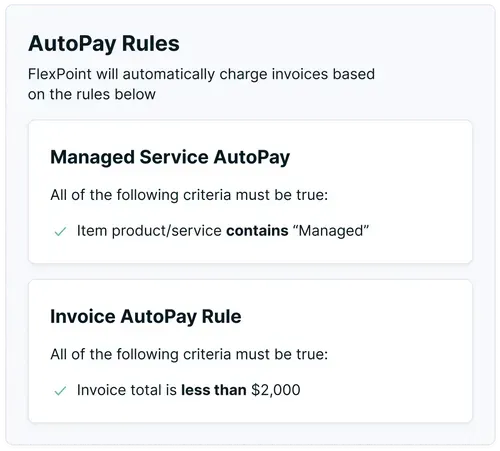
AutoPay takes this one step further by eliminating the need for client action altogether. Clients don’t have to remember due dates, log into portals, or think about whether a holiday might affect their payment. Even when banks are closed or people are out of office, payments still move forward as soon as processing resumes. The result is far more predictable cash flow and far fewer “Hey, just checking on this invoice” messages.
In short, automation doesn’t just help MSPs survive bank holidays. It makes them largely irrelevant.
Scheduled Billing and Payment Runs: Eliminate Last-Minute Processing
Recurring schedules remove the risk of “we forgot it was a holiday week.”
With predefined billing cadences and payment submission timing, MSPs can queue transactions ahead of long weekends or midweek closures. That proactive structure prevents settlement from slipping by multiple business days.
When schedules are built into your workflow, bank holidays become calendar events not operational surprises.
Client Portal: Reduce Back-and-Forth During Closure Periods
Holidays often mean reduced staffing both for you and your clients.
A centralized client portal allows customers to view invoices, update payment methods, and complete transactions without waiting for manual intervention. That self-service access becomes especially valuable when bank branches are closed or teams are offline.

Instead of handling payment questions over email during a short week, your clients have direct visibility and control.
General Best Practices for Navigating Bank Holidays
Even with automation in place, planning matters.
Review the federal holiday calendar at the beginning of the year and align it with your billing cadence. Initiate large ACH files at least one business day before a closure. Communicate clearly with vendors and clients if settlement timing may shift.
Most importantly, remove dependency on manual workflows. The fewer steps that require human timing, the less impact a holiday will have.
MSPs that automate don’t avoid bank holidays, they simply operate around them without disruption. Meaning you and your clients get a vacation but you also don't lose out on any money.
How To Avoid Payment Delays Caused by U.S. Bank Holidays
Platforms like FlexPoint are built specifically with the realities of MSP billing in mind, including the parts no one enjoys dealing with, like bank holidays, processing delays, and unpredictable payment timing. Rather than forcing MSPs to work around the banking system manually, FlexPoint is designed to work with it.
With FlexPoint, scheduled payments and AutoPay are core tools for stability. Payments can be set up in advance, aligned with your billing cycles, and allowed to process automatically when banks are open. When a bank holiday hits, nothing breaks. Payments don’t fail, invoices don’t need to be resent, and your team doesn’t need to jump in to fix anything. Processing simply resumes on the next business day.
For clients, this creates a smoother experience. They’re not surprised by delays, asked to resubmit payments, or pulled into awkward conversations. Payments happen quietly in the background, even when holidays, vacations, or long weekends intervene.
For MSP finance and operations teams, the impact is just as meaningful. Less time is spent monitoring payment status, answering questions about delays, or manually following up on invoices. Instead of babysitting payments around every holiday, teams can trust that the system is handling timing correctly.
The result is simple happier clients and employees and more predictable cash flow for MSPs. Instead of reacting to bank closures, FlexPoint helps MSPs stay ahead.
Bank holidays aren’t surprises, they happen every year, on the same dates, and affect the same banking systems. The disruptions MSPs experience around them usually aren’t about the holidays themselves, but about processes that rely too heavily on manual effort and perfect timing.
By understanding the U.S. bank holiday calendar and leaning into automation, scheduled payments, and AutoPay, MSP owners can protect cash flow, reduce administrative work, and eliminate a lot of unnecessary stress. When payments are set up correctly, a closed bank doesn’t trigger follow-ups, rescheduling, or awkward client conversations, it simply becomes part of the background.


%20(1).jpg)