

Managed service providers are under constant pressure to do more with less. More clients, more services, more billing complexity, and more expectations around speed and accuracy.
That pressure shows up everywhere, but most acutely in your financial and operational systems.
If your stack is not tightly connected, quotes stall, invoices lag, payments get delayed, and reporting becomes unreliable.
For MSPs using NetSuite, that is where integrations come in.
This guide breaks down the most important NetSuite integrations for MSPs, what they actually do, and how they impact your business operations in real terms.
If you’re evaluating how NetSuite fits into your broader stack, it’s also worth looking at how other systems connect. Our guides to ConnectWise CPQ integrations and Sage Intacct integrations break down how quoting and accounting tools fit into MSP billing and financial workflows.
{{toc}}
What Is NetSuite ERP? A Complete Overview for MSPs
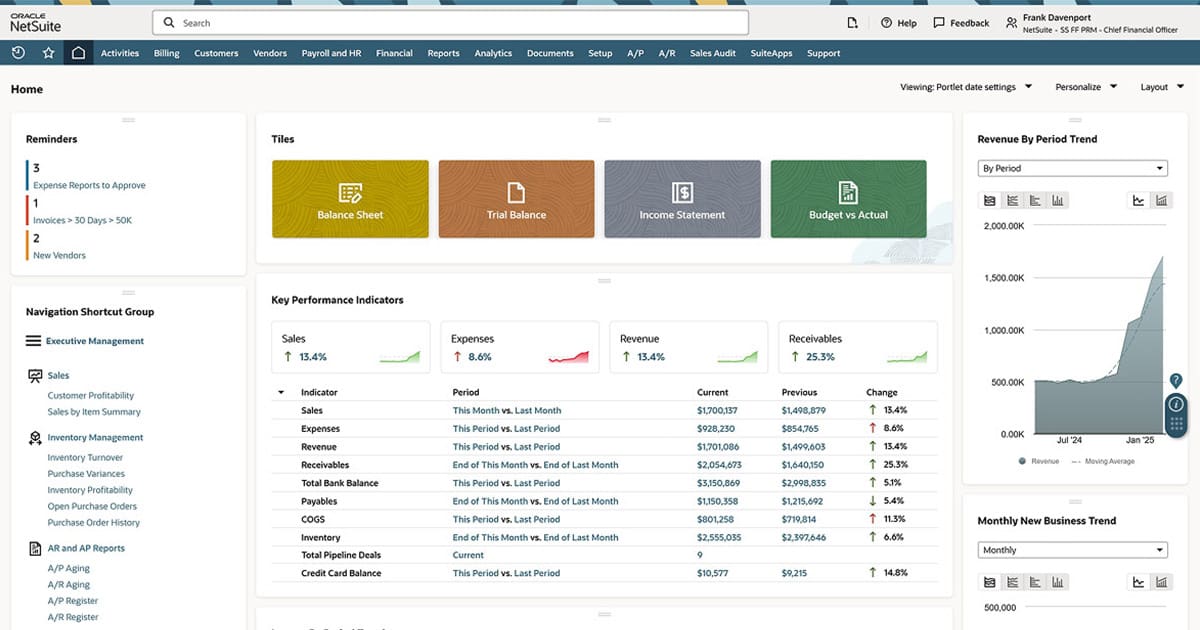
NetSuite is a cloud-based ERP platform developed by Oracle. It brings together accounting, financials, CRM, inventory, and operational data into a single system.
Originally founded in 1998 as one of the first cloud-native business software platforms, NetSuite was built on the idea that core business systems should live in one unified environment rather than across disconnected tools. Over time, it expanded from web-based accounting into a full ERP suite used by tens of thousands of businesses to manage financials, operations, and reporting in real time.
For users, NetSuite often becomes the financial source of truth. It is where revenue is recognized, invoices are tracked, and reporting happens.
But NetSuite is not designed to operate alone.
It is built as part of a broader ecosystem, with APIs, integration frameworks, and middleware that allow it to connect with other systems across your stack. Through tools like REST and SOAP APIs, SuiteCloud, and third-party connectors, NetSuite allows for an unlimited amount of integrations to create a unified workflow.
That design is intentional. NetSuite serves as the central system of record, while integrations ensure the rest of your tools feed into it cleanly and in real time.
Why NetSuite Integrations Are Critical for MSP Billing, Automation, and Scalability
Chances are good that you don’t want an unlimited amount of integrations, though. You just want the right ones.
The challenge is that MSPs operate across multiple systems by default. You have a PSA for service delivery, a CRM for pipeline, and payment systems for collections. With so many moving parts, figuring out which integrations actually matter can get overwhelming fast.
NetSuite is a powerful tool, but it was not purpose-built for MSP workflows. It depends heavily on integrations to connect the rest of your stack and make those systems work together.
Without those integrations, you end up with:
- Manual data entry between systems
- Delayed billing cycles
- Inconsistent financial reporting
- Limited visibility into the pipeline and cash flow
If you are reading this, you are probably already feeling some version of that.
The right integrations do not just improve things around the edges. They remove entire points of friction:
- Quotes do not need to be re-entered into accounting
- Invoices are generated automatically from service activity
- Payments reconcile without manual matching
- Financial reporting reflects real-time business performance
At a high level, integrations turn a disconnected stack into a coordinated system.
Instead of chasing data across tools, everything moves together. And that is what allows an MSP to grow without operations becoming the thing that slows it down.
For a deeper look at how NetSuite integrations work specifically for MSP billing and payments, you can explore our NetSuite integration overview.
The Most Important NetSuite Integrations for MSPs
Like mentioned above, NetSuite offers thousands of integrations and there is no shortage of lists claiming to rank the “best” ones.
But for MSPs, the goal is not to chase a generic top 10. It is to focus on the integrations that matter most to how your business actually runs day to day.
That’s why we will break down the most important NetSuite integrations by the core systems MSPs rely on, and where they have the greatest impact on billing, operations, and revenue.
PSA Integrations: Connecting Service Delivery to Financials
For MSPs, the PSA is the operational core of the business.
Tools like ConnectWise, Autotask, or HaloPSA manage tickets, contracts, time tracking, and service delivery.
But NetSuite does not natively understand that activity unless it is integrated.
A PSA integration ensures that:
- Service tickets and time entries flow into billing automatically
- Contracts and recurring services are reflected in invoicing
- Revenue recognition aligns with actual work performed
Without this connection, teams often rely on exports, spreadsheets, or manual reconciliation.
That leads to delayed invoices and missed revenue. In fact, 61% of late payments are caused by invoice errors, many of which stem from manual processing workflows.
But with the connection, you get:
- Faster billing cycles
- More accurate invoices
- Less administrative overhead
For MSP operators, this is one of the highest-impact integrations you can implement.
HaloPSA

HaloPSA offers a bi-directional NetSuite integration through a connector built by a third-party partner, Catalyst. The integration is available through Halo’s Integration Library and can be configured using field mapping, automation rules, and scheduled syncs.
Because this is a supported, packaged integration rather than a purely custom API setup, it provides a more structured way to connect HaloPSA with NetSuite. For MSPs using Halo, this makes it a stronger fit than tools that rely entirely on custom development, while still requiring a third-party layer to enable the connection.
Autotask PSA

Autotask is highly integration-friendly, but there isn't a native, first-party NetSuite integration from Kaseya/Datto itself.
Similar to HaloPSA above, integration is possible but it must be done through a third-party like Zapier (shown above). Catalyst (as mentioned above) also supports an integration between Autotask PSA and NetSuite.
These integrations enable data to flow between Autotask and NetSuite, but they require external setup and configuration rather than a built-in connector. In practice, this means Autotask can integrate effectively with NetSuite, but it depends on partner-built solutions or custom API work rather than a direct, native integration.
ConnectWise

ConnectWise does not provide a native NetSuite integration built directly into its PSA platform. Instead, it relies on its developer ecosystem and marketplace for third-party solutions.
One example is the NetSuite Accelerator by GURUS Solutions, available in the ConnectWise Marketplace. This integration supports two-way synchronization of customers, invoices, credit memos, purchase orders, and payments between ConnectWise and NetSuite.
As a result, ConnectWise can integrate deeply with NetSuite, but it does so through middleware, marketplace accelerators, or custom API implementations rather than a first-party connector.
NetSuite PSA: Oracle’s native PSA solution. Strong for project-based MSPs and services organizations. Convenient because it's part of NetSuite already, though it may lack some of the MSP-specific workflows found in dedicated PSA platforms.
Payment Integrations: Closing the Quote-to-Cash Gap
Even with PSA and ERP systems connected, payments often sit outside the workflow.
Invoices get sent, but cash collection depends on manual steps, disconnected systems, or follow-up from the finance team. That creates a gap between invoicing and actually getting paid.
The right payment integrations are what close that gap.
The right solutions integrate directly with NetSuite to:
- Sync invoices in real time
- Enable automated payment collection
- Reconcile transactions back into NetSuite
- Reduce manual work for finance teams
This is not just about convenience.
It directly impacts:
- Days sales outstanding (DSO): A/R automation streamlines billing processes and saves time on average by 81% on invoice processing.
- Cash flow predictability: Automated invoicing, reminders, and payment collection create more consistent payment cycles, making cash flow easier to forecast and manage.
- Finance team efficiency: Finance teams can spend 20–50 hours per month on manual reconciliation alone. Automating payment collection and reconciliation eliminates that workload, freeing teams from chasing payments and matching transactions.
When payments are integrated into NetSuite, you move from “invoice sent” to “cash received” without friction.
FlexPoint

FlexPoint is purpose-built for MSP payment automation with a direct NetSuite integration. It connects NetSuite with your PSA and payment workflows to create a fully automated billing and collection process without relying on manual steps or disconnected systems.
FlexPoint syncs invoices from NetSuite in real time, allowing payments to be initiated as soon as invoices are generated. From there, it enables automated ACH and card payments through a client-facing payment experience, while handling reconciliation directly back into NetSuite.
What makes this especially impactful for MSPs is how it connects across the full stack. FlexPoint integrates not only with NetSuite, but also directly with the PSA platforms mentioned above like Autotask, ConnectWise, and HaloPSA. That allows service activity, billing, and payment collection to stay aligned without requiring exports, spreadsheets, or manual intervention between systems.
A few other features of FlexPoint include:
- Seamless client payments through a white-labeled client payment portal
- Automated reminders and retry logic to reduce late or failed payments and lower DSO
- Real-time reconciliation within NetSuite, eliminating manual matching
- Centralized visibility into cash flow and outstanding invoices for better forecasting
Together, these directly address the biggest operational challenges MSPs face by reducing DSO, eliminating manual reconciliation work, and making cash flow more predictable.
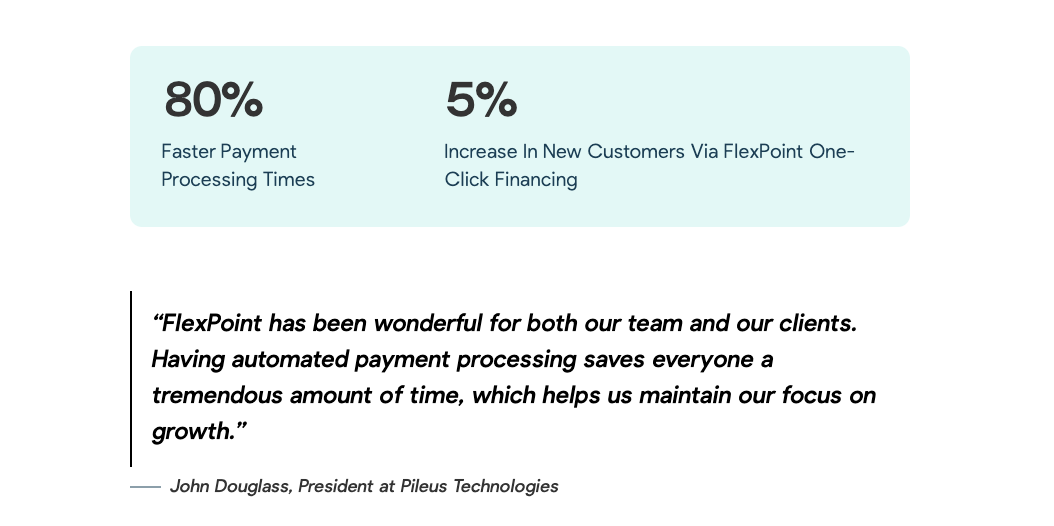
MSPs using FlexPoint see this in practice. For example, Pileus Technologies was able to streamline billing and payment workflows and increase their payment processing time by 80%.
CRM Integrations: Maintaining Pipeline Visibility
Sales and finance are often disconnected in MSP environments. Your CRM holds pipeline data, while NetSuite holds financial outcomes.
If those systems are not integrated, you lose visibility between what is expected and what actually closes.
CRM integrations with tools like Salesforce or HubSpot allow you to:
- Sync closed deals into NetSuite automatically
- Align quoting, invoicing, and revenue tracking
- Improve forecasting accuracy
For MSP owners, this means:
- Better visibility into future revenue
- Less manual handoff between sales and finance
- Fewer errors in deal-to-invoice conversion
It also creates a more consistent customer experience from sales through onboarding and billing.
Salesforce

Salesforce is an enterprise-grade CRM used by MSPs to manage pipeline, accounts, and forecasting at scale.
- Salesforce manages pipeline, deals, and customer relationships
- NetSuite manages invoicing, revenue recognition, and financial reporting
In 2024, Oracle announced NetSuite Connector for Salesforce to provide a more standardized way to connect the two systems. The connector enables customer, order, and transaction data to sync between Salesforce and NetSuite, reducing manual handoff between sales and finance.
When integrated, closed-won deals in Salesforce can flow directly into NetSuite to support billing and financial workflows, helping ensure that what is sold is accurately reflected in revenue and reporting.
Hubspot

HubSpot is widely used among SMB and mid-market MSPs for managing pipeline, marketing, and customer relationships with a more lightweight and easy-to-use CRM.
- HubSpot manages contacts, companies, deals, and marketing engagement
- NetSuite manages invoices, orders, and financial reporting
HubSpot offers a native integration with NetSuite through its data sync and connected app framework. Once connected, MSPs can sync key objects like contacts, companies, deals, invoices, and sales orders between the two systems, with support for both one-way and two-way data sync.
In practice, this allows closed deals in HubSpot to trigger downstream actions like creating NetSuite sales orders or syncing customer records, reducing manual handoff between sales and finance.
Because the integration is configurable through sync settings and field mapping, it offers a relatively fast and flexible way for MSPs to align pipeline activity with financial outcomes without heavy implementation overhead.
NetSuite CRM: NetSuite’s built-in CRM eliminates the need for external integration by keeping customer, sales, and financial data in one system. This reduces complexity and removes sync issues, though it may lack some flexibility regarding reports.
How to Build a Seamless NetSuite Workflow for MSPs
Most MSPs think about integrations in isolation.
But the real value comes from connecting the entire flow end to end. When each system feeds the next automatically, you reduce errors and create a consistent path from closed deal to collected cash.
A strong NetSuite-centered workflow looks like this:
- Deal is closed in CRM: A deal is marked closed-won in a CRM like HubSpot or Salesforce, and customer, pricing, and contract data sync forward without manual re-entry.
- An agreement is created in PSA: That deal flows into a PSA such as ConnectWise or Autotask, where agreements, recurring services, and billing structures are defined.
- Services and products flow into NetSuite: Service activity, time entries, and contract data sync into NetSuite, ensuring billing reflects what was actually delivered.
- An invoice is generated automatically: NetSuite creates invoices based on contracts, usage, and services without manual compilation or adjustments.
- Payment is collected and reconciled: Payments are collected through an integrated solution like FlexPoint, which syncs invoices, automates collection, and reconciles transactions directly back into NetSuite.
- Financial reporting updates in real time: With payments synced, NetSuite reflects accurate revenue, cash flow, and outstanding balances without delay.
The key piece that often gets missed is step five.
Without integrated payments, the workflow breaks right before cash is collected. Everything up to that point can be automated, but if payments are still manual or disconnected, you reintroduce friction at the most important stage.
How NetSuite ERP Integrations Impact MSP Growth and Cash Flow
Most MSPs do not have a revenue problem. They have a gap between work completed and cash collected.
That gap is usually not obvious at first. It shows up in small ways: invoices go out a few days late, payments require manual reconciliation, reporting takes longer than it should. Individually, these feel manageable. Together, they slow the entire business down.
The difference between a stable MSP and a strained one is how that gap is handled.
When your systems are disconnected, growth only increases the problem. More clients mean more tickets, more contracts, more invoices, and more opportunities for something to fall behind. What worked at 20 clients starts to break at 200.
When your systems are connected, growth does the opposite. Financial data stays accurate without constant intervention and you’re able to be more proactive in your choices.
That is why an integrated NetSuite workflow does more than improve operations: it fundamentally changes how revenue actually moves through your business. Instead of relying on people to send invoices, chase payments, and reconcile everything manually, those steps happen automatically.
That is what allows an MSP to scale without operations becoming the bottleneck.
Because for most MSPs using NetSuite, the gap is not billing or reporting. It is what happens after the invoice is sent.
That's why FlexPoint connects NetSuite with your PSA and payment workflows so collections, reconciliation, and cash visibility all happen in one place. Invoices are not just sent, they are tracked, collected, and reflected accurately in your financials.
If you are already using NetSuite and your payments are still manual or disconnected, FlexPoint is the missing piece. Read about our integration linked above or explore more of our platform to see if FlexPoint is the right fit for you.