


On December 1, 2025, OpenAI announced it had taken an ownership stake in Thrive Holdings, a firm backed by investment firm Thrive Capital that acquires and operates companies in sectors like accounting and IT services. Rather than paying cash, OpenAI is offering its teams (researchers, engineers, product developers) and access to its AI platform in exchange for equity.
The big idea: turn traditionally manual, fragmented, rules‑heavy workflows that plague IT services and accounting into AI‑native operations. Workflow-heavy business functions (think billing, support, monitoring, reporting, collections) are exactly where AI-fueled gains could show up fastest.
Thrive Holdings highlights why IT services and accounting are the initial target:
“These functions are a natural place to begin, but they are only the start. Many traditional industries that support the real economy share similar characteristics: high‑volume processes, aging operational infrastructure, and teams relegated to repetitive, low-leverage work.”
The trickle-down effects of this investment are inevitable. Beyond the headlines, MSPs will eventually feel the shift from AI as a helpful add-on to AI as a core, embedded part of how you operate. It’s just a matter of when and if service providers are prepared to adapt to these long-term market changes.
What OpenAI’s Investment in Thrive Holdings Means for MSPs
By embedding AI research, product, and engineering teams directly into service companies, OpenAI is essentially forcing an acceleration of AI-adoption in the IT market.
And that's not a bad thing.
Industry analysts have recently defined what the next stage of the managed services delivery model will look like. Aptly named MSP 3.0, Omdia describes it best:
“The industry has seen a move from break/fix (reactive) to an RMM and backup-based (proactive) model and is now standing on the edge of a new era. The complexity of the new delivery model is that it encompasses not just a technology requirement, the scope of which is increasing to include cybersecurity as standard (rather than as an add-on to IT support), but also compliance, regulation and vertical expertise, such that an MSP that does not offer these things may not be able to operate in the near future, or at least fewer of these will be able to.”
AI-adoption is a natural next step to keep pace with heightened expectations and market demands. But what exactly are the effects of normalizing AI across MSP operations?
1. The competitive bar is rising
MSPs that use AI (and use it well) will have a distinct advantage. Businesses that adopt AI automation across support, documentation, and financial operations can:
- Reduce ticket resolution times with AI triaging, drafting responses, and identifying recurring problems.
- Automate documentation and reporting, freeing staff for higher-value tasks.
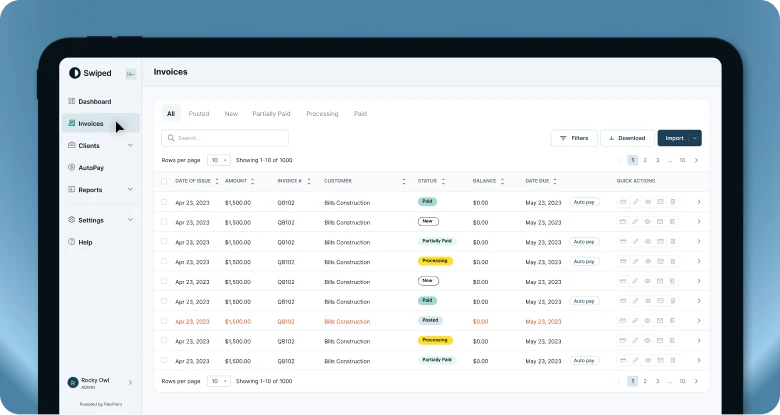
- Streamline billing, accounts receivable, and collections to improve cash flow.
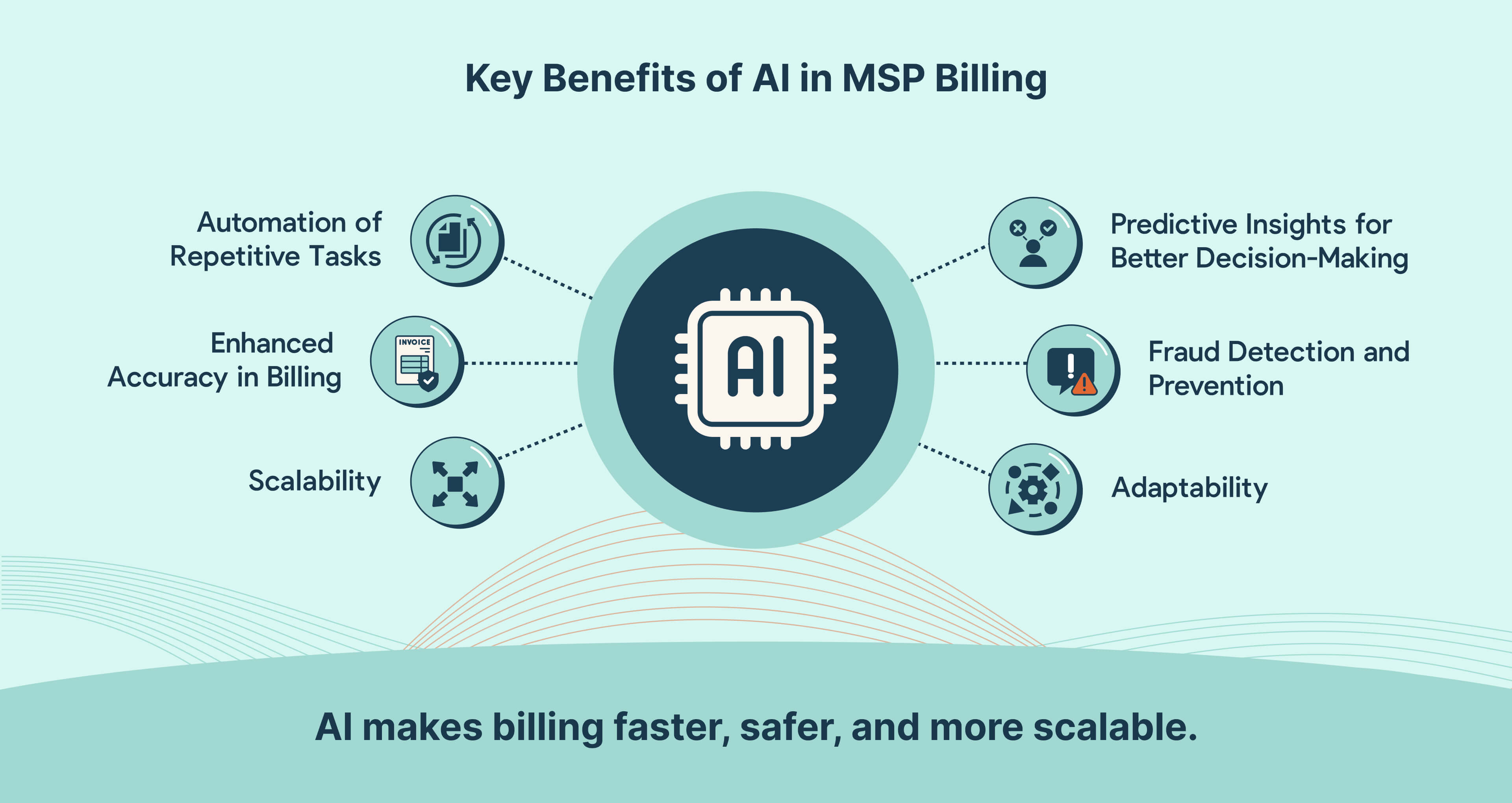
The result: faster, more reliable service delivered at a lower operational cost. For MSPs still relying on largely manual processes, competing on speed, accuracy, and consistency will become increasingly difficult.
2. Clients will expect more, and faster
As AI-native MSPs set new standards, clients will come to expect:
- Rapid ticket resolution: No more waiting days for simple fixes or routine updates.
- Proactive maintenance: AI-powered monitoring predicts issues before they cause downtime.
- Predictable billing: Automated invoicing, reminders, and reconciliation create transparency and reduce payment friction.
- Clear, consistent communication: AI agents ensure updates and follow-ups are timely, professional, and on-brand.
MSPs that fail to meet these expectations may lose clients or struggle to justify premium pricing, even if they provide competent technical support.
3. Operational efficiency will matter more than ever
AI automation enables MSPs to scale without linear growth in headcount. By automating repetitive tasks, like ticket management to invoice follow-ups, MSPs can:
- Reduce labor costs and redirect staff toward higher-value work.
- Improve cash flow through faster collections and fewer overdue invoices.
- Increase scalability without adding proportional overhead.
The firms that harness AI effectively will have a more predictable, stable, and profitable operation. Those that don’t may find growth bottlenecked by manual processes, staffing constraints, or inconsistent service delivery.
What MSPs Can Do to Stay Ahead with AI Automation
If you run an MSP, this shift demands a clear strategy. Here’s what to start:
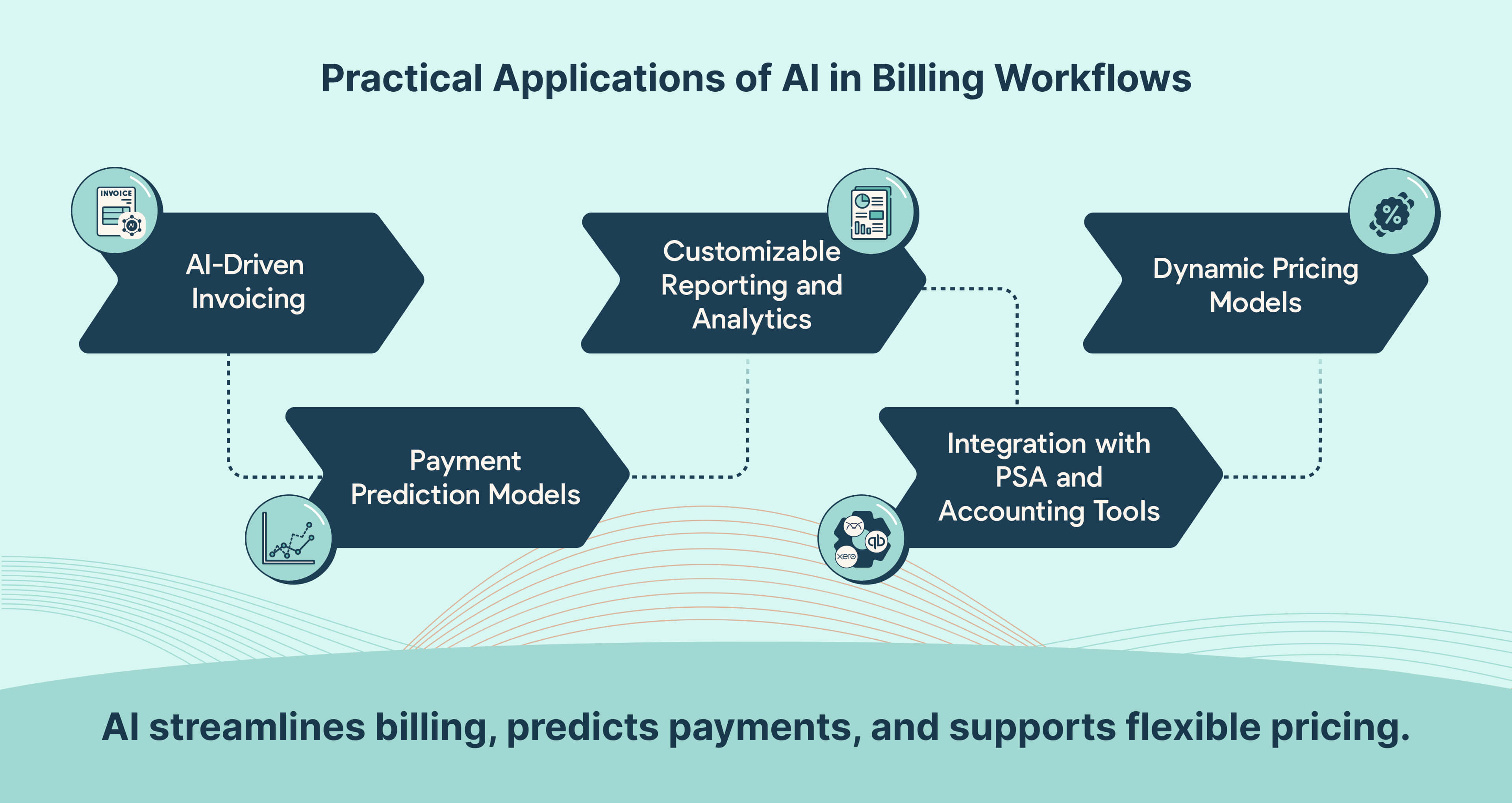
- Audit your workflows now. List out repetitive manual tasks: ticket triage, documentation, maintenance logs, billing, payment reminders, AR follow-up. Identify what could be automated or streamlined.
- Adopt a modular approach. You don’t need to overhaul everything at once. Start with low-hanging fruit like billing automation, payment processing, then layer in AI for collections and reporting
- Invest in data hygiene and systems integration. AI works best when you have clean, consistent data and integrated systems (PSA, quoting, accounting, billing). Disconnected tools will limit the gains.
- Communicate transparently with clients. AI automation should improve service and predictability. But clients care about trust, clarity, and support quality. If you’re going to automate billing or support workflows and utilize AI agents, make sure changes are clear and send the right messages.
- Position your brand around efficiency and reliability. Use AI automation as a differentiator. Use it to convey faster turnaround, predictable billing cycles, fewer manual errors, and reliable service delivery.
The Inevitable Shift to AI Automation for MSPs
What’s especially important about OpenAI’s stake in Thrive Holdings is how deeply integrated this strategy is. This isn’t a vendor‑client deal. OpenAI becomes a stakeholder, embedding AI teams directly into service firms. That changes incentives: it’s not to sell an AI tool. It’s to run service firms through AI.
This “inside-out” transformation (to borrow Thrive’s words) could redefine what it means to be an MSP. Over time, the divide might not be between “legacy MSP” and “AI-enabled MSP.” It could be between “operation‑native MSPs” and “everyone else.”
For your clients, that means they’ll start expecting – and paying for – faster, more consistent, predictable service. For you, it means a choice: adapt to a new standard or risk falling behind.



.png)