

.png)
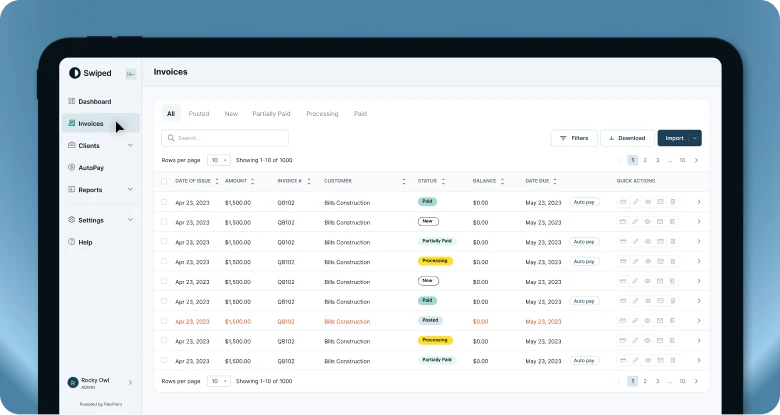
Late payments over 60 days are a reality for 81% of Managed Service Providers (MSPs). According to MSP Insights, most respondents report this causes ongoing cash-flow stress.
This kind of delay strains day-to-day operations, and many MSPs deal with slow payments and rising unpaid invoices each month.
Manual accounts receivable (A/R) processes can’t keep up with growth.
MSP finance teams may send dozens, or even hundreds, of invoices, often later than planned or with errors, and then spend hours following up with clients. One month’s revenue might come in on time. Next, it’s delayed by weeks.
That kind of unpredictability makes it hard to cover expenses or reinvest with confidence.
As invoice volume increases, manual A/R management becomes harder to sustain.
You might rely on spreadsheets, accounting software, and a PSA (Professional Services Automation) tool that don’t sync with each other. Data gets re-entered and double-checked in multiple places. Errors slip in.
Late payments and A/R issues hold back growth.
In this article, we explain why MSPs need an accounts receivable automation solution to solve these challenges.
We will show the operational and financial benefits of automating A/R, and how FlexPoint helps MSPs get paid faster with less manual effort.
What Is an Accounts Receivable Automation Solution for MSPs?
Accounts receivable automation means putting your billing and collections on autopilot. For MSPs, an A/R automation solution is software that handles the entire invoice-to-cash process with minimal manual effort.
Instead of staff manually creating invoices, sending reminders, and recording payments, the system automates those steps.
Key capabilities of an MSP-focused A/R automation solution include:
Automated Invoice Generation:
The software pulls data from your PSA (e.g., ticket details, contracts, usage logs) and automatically creates invoices on schedule.
Recurring monthly service fees, usage-based charges, and pass-through costs all appear on invoices without having to be entered each time. This automation ensures invoices go out on time and accurately.
Automated Payment Collection:
The system can store clients' payment methods (credit cards, ACH) and process payments as soon as invoices are due. Clients can also enroll in AutoPay to be charged each billing cycle automatically.
By collecting payments via ACH and credit card through a secure payment portal, MSPs get paid promptly with less effort.
Automated Reminders and Follow-Ups:
An A/R automation solution sends friendly payment reminder emails and past-due notices to clients on a set schedule.
This feature standardizes the follow-up process, ensuring every overdue invoice receives attention without requiring a team member to draft emails manually.
Automated Posting to Accounting:
When a client pays, the accounts receivable software records the payment and marks the invoice as paid in both your PSA software and your accounting system (such as QuickBooks or Xero).
This two-way sync means your records stay consistent across systems. No more updating QuickBooks by hand for each payment.
Automated Reconciliation:
The platform automatically matches incoming payments (including any processor fees or partial payments) to the correct invoices.
Bank deposits are reconciled with invoice records without combing through statements line by line.
Automated reconciliations eliminate the tedious end-of-month reconciliation crunch.
Real-Time A/R Visibility:
MSP owners and finance teams get a real-time dashboard showing the status of accounts receivable.
You can instantly view total outstanding invoices, see which clients are overdue, and access a current A/R aging report. This visibility helps identify issues early and improves cash flow forecasting.
An A/R automation solution serves as the bridge between your PSA, billing workflows, payment processing, and accounting systems. It supports the billing complexity common in MSP operations: recurring service fees, one-time projects, usage-based charges, and tiered pricing.
The software also ensures every invoice is handled consistently across clients and billing cycles. Instead of fragmented processes, you get a single, repeatable system that manages invoicing, collections, and reconciliation from start to finish.
By integrating with existing tools, A/R automation keeps your data aligned and reduces manual work in billing and follow-ups.
The Problems with Manual Accounts Receivable Processes in MSPs
Even a well-run MSP can run into serious cash flow issues when relying on manual A/R processes.
Here are six big ways that manual accounts receivable can hold MSPs back:
1. Slow and Inconsistent Client Payments
When invoices are sent manually, they are often sent late or irregularly. Some clients may receive their bill on the 1st of the month; others may not receive it until a week later.
Without clear schedules or AutoPay, many clients forget to pay on time or push payments to the next cycle. This inconsistency leads to unpredictable cash inflows.
One month’s revenue might arrive promptly, while the next month, half the payments trickle in weeks late.
The lack of consistency makes it hard to plan and causes aging A/R balances to grow.
2. High Volume of Manual Follow-Ups
With manual processes, finance teams spend hours every billing period emailing and calling clients about overdue invoices.
There’s no standardized collection workflow; it depends on individual effort. Your bookkeeper might have to remember which clients need a reminder this week and craft each message from scratch.
This reactive approach wastes valuable time and energy. Staff end up distracted from other finance tasks by constant follow-up communications.
Despite all the effort, some clients still ignore reminders, and the cycle repeats.
3. Poor Visibility into A/R Status
Manual A/R often means data is scattered across multiple locations. You might track invoice status in a spreadsheet or check payment status in your PSA and bank account separately.
By the time you compile an aging report, it’s already outdated.
This lack of real-time visibility leaves leadership and owners in the dark. It’s hard to know exactly which invoices are paid and which are pending at any given time.
Without accurate A/R data, you can’t confidently forecast cash flow or identify problem accounts early.
An MSP may get blindsided by a cash shortfall simply because information was siloed and slow to update.
4. Billing Errors and Disputes
Human billing processes are prone to mistakes. A technician may forget to add a time-and-materials charge to an invoice, or an outdated rate may be applied is a recurring service.
Manual adjustments can introduce typos or miscalculations. These errors lead to invoices that clients may dispute or question. A client who sees an incorrect charge is likely to delay payment and request clarification or a revised invoice.
Not only does waiting longer to get paid create extra work, but it can also strain the client relationship.
Trust can erode if billing is frequently inaccurate.
5. Time-Consuming Reconciliation
Matching up payments to invoices at month-end becomes a nightmare when done manually.
One deposit from a client might cover three separate invoices; another payment might include an extra for last month’s balance.
Meanwhile, credit card fees or partial payments complicate the records.
Without automation, your team spends days at the end of the month reconciling bank deposits, payment processor reports, and invoice lists.
This process is stressful and error-prone, often requiring adjustments when things don’t line up perfectly. The accounting close takes much longer than it should, delaying financial reporting.
6. Disconnected Systems
Most MSPs use a mix of tools: a PSA for tracking work, an invoicing tool or accounting software for billing, and a separate payment processor or gateway. If these systems aren’t integrated, data doesn’t flow smoothly.
Staff end up entering the same data in multiple places, such as creating an invoice in the PSA and then again in QuickBooks.
This duplicate work is inefficient and inevitably leads to inconsistencies (the invoice in QuickBooks might not match what’s in the PSA).
Disconnected systems result in fragmented records and additional administrative effort to keep everything aligned. It becomes increasingly difficult to scale because every new client or billing cycle multiplies the manual work across systems.
Manual A/R processes create delays, extra work, and lost visibility. These issues start as minor headaches but quickly become serious growth blockers for MSPs.
When you’re spending more time chasing payments than serving clients, it’s a clear sign that the manual approach isn’t sustainable.
The Business Impact of Accounts Receivable Automation for MSPs
Implementing accounts receivable automation directly addresses the pain points above and delivers tangible benefits for an MSP’s financial health and efficiency.
Here are some of the major business impacts MSPs can expect by automating their A/R process:
Faster Payments:
Automation helps ensure invoices are sent on time and enables features such as AutoPay. Clients can be billed automatically, reducing payment delays.
The system also sends consistent reminders to ensure nothing slips through the cracks. Faster payments mean cash is in your bank sooner.
According to PYMNTS, 87% of businesses that automated A/R report that they process payments faster than before.
Lower A/R Aging:
With timely invoicing and persistent follow-ups, automation improves collection rates.
Every client receives the same professional reminders, and overdue accounts are not forgotten. This leads to a noticeable drop in average A/R aging (invoices spend less time outstanding).
Consistently lower A/R aging improves cash flow predictability, so you’re not constantly worried about old invoices lingering unpaid.
Reduced Manual Work:
By letting software handle repetitive billing tasks, MSP finance teams reclaim many hours each month.
Invoice generation, email reminders, and payment logging can occur automatically in the background.
This automation reduces workload for your bookkeepers and administrators, freeing them to focus on higher-value activities such as analysis and budgeting.
One PYMNTS study found that companies with manual payment follow-up processes spend 67% more time on follow-ups than those with automated processes.
Improved Accuracy:
Automation virtually eliminates common billing and accounting errors. Invoices are generated from source data (so no typos), and payments are applied automatically (no manual data entry mistakes).
With integrations, your PSA, payment system, and accounting software all mirror the same information.
Fewer errors mean fewer client disputes and less time fixing mistakes. Your financial records stay clean and audit-ready.
Real-Time Visibility:
An automated A/R platform gives you up-to-date dashboards and reports. You can see exactly which invoices are pending and which have been paid this week, without waiting for someone to update a spreadsheet.
This real-time visibility lets you forecast cash flow with confidence and make informed decisions (such as whether to make a major equipment purchase or hire staff) based on accurate, up-to-date data.
You’ll know if a particular client is habitually late or if overall collections are improving month over month.
Scalability:
Perhaps most importantly, A/R automation makes your billing operation scalable as you grow.
Adding 10 new clients or doubling your revenue won’t require hiring another full-time finance employee to keep up with invoicing.
The system simply handles more volume. MSPs can grow without bottlenecks in the finance process, avoiding the need to add headcount in lockstep with revenue.
Your team can manage a larger business with the same resources, thereby improving your margins as you scale.
Automating accounts receivable improves both financial performance (through faster cash collection and lower outstanding debt) and operational efficiency (through time savings and reduced billing errors).
Automation turns A/R from a reactive, labor-intensive function into a streamlined process that supports the business.
These advantages ultimately enable MSPs to stabilize their cash flow and focus on growth rather than paperwork.
How FlexPoint Delivers MSP-Specific Accounts Receivable Automation
FlexPoint is an accounts receivable automation platform built specifically for MSPs. The platform addresses the unique billing challenges managed service providers face and replaces fragmented workflows with a unified solution.
Here’s how FlexPoint delivers MSP-specific A/R automation:
Automated Billing Across All MSP Models:
FlexPoint supports recurring monthly contracts, usage-based billing, project invoices, pass-through expenses, and more, all without manual invoice creation.
Whether you charge a fixed $X per endpoint, bill hourly for support, or resell licenses with a markup,
FlexPoint can automatically generate accurate invoices each cycle. No more spending days compiling charges; billing happens in a few clicks.
Automated Payment Collection (AutoPay):
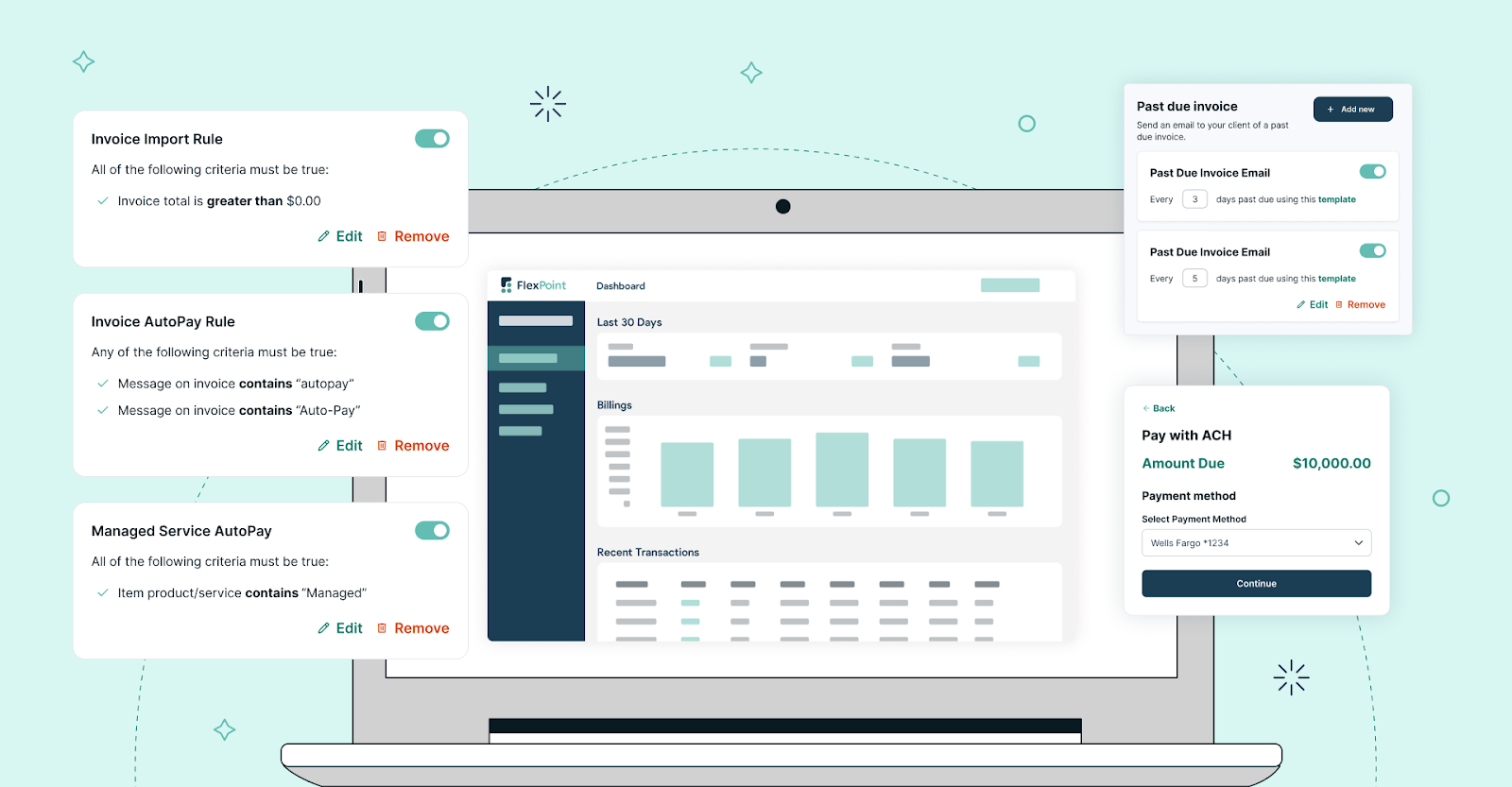
With FlexPoint, MSPs get paid faster through integrated payment processing. Clients can securely save a credit card or bank account and enroll in AutoPay to be charged automatically when an invoice is issued.
This automation drastically reduces late payments, since most clients pay automatically on invoice day.
FlexPoint also offers a branded payment portal for clients who prefer to pay manually, making the experience simple (one-click financing payments, ACH options, etc.).
Automated Collections Workflows:
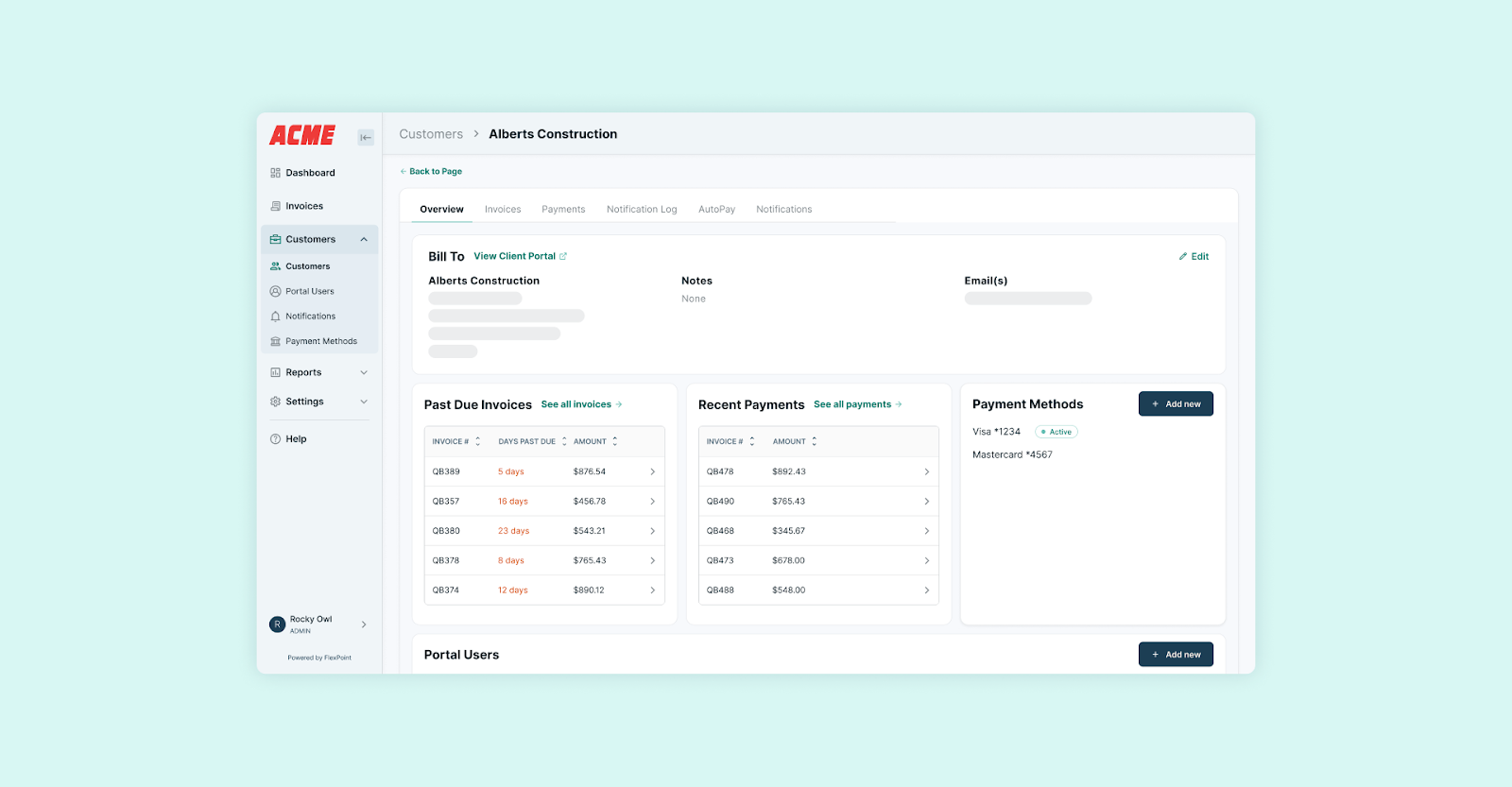
The platform handles client reminders and follow-ups. You can configure FlexPoint to send polite payment reminder emails at set intervals.
For example, a reminder 3 days before the due date, on the due date, and if necessary, a past-due notice 7 days after.
These communications are tracked, so you know when a client opened the invoice or reminder. FlexPoint’s automated collections ensure no invoice falls through the cracks, without your staff personally chasing each one.
Two-Way PSA and Accounting Sync:
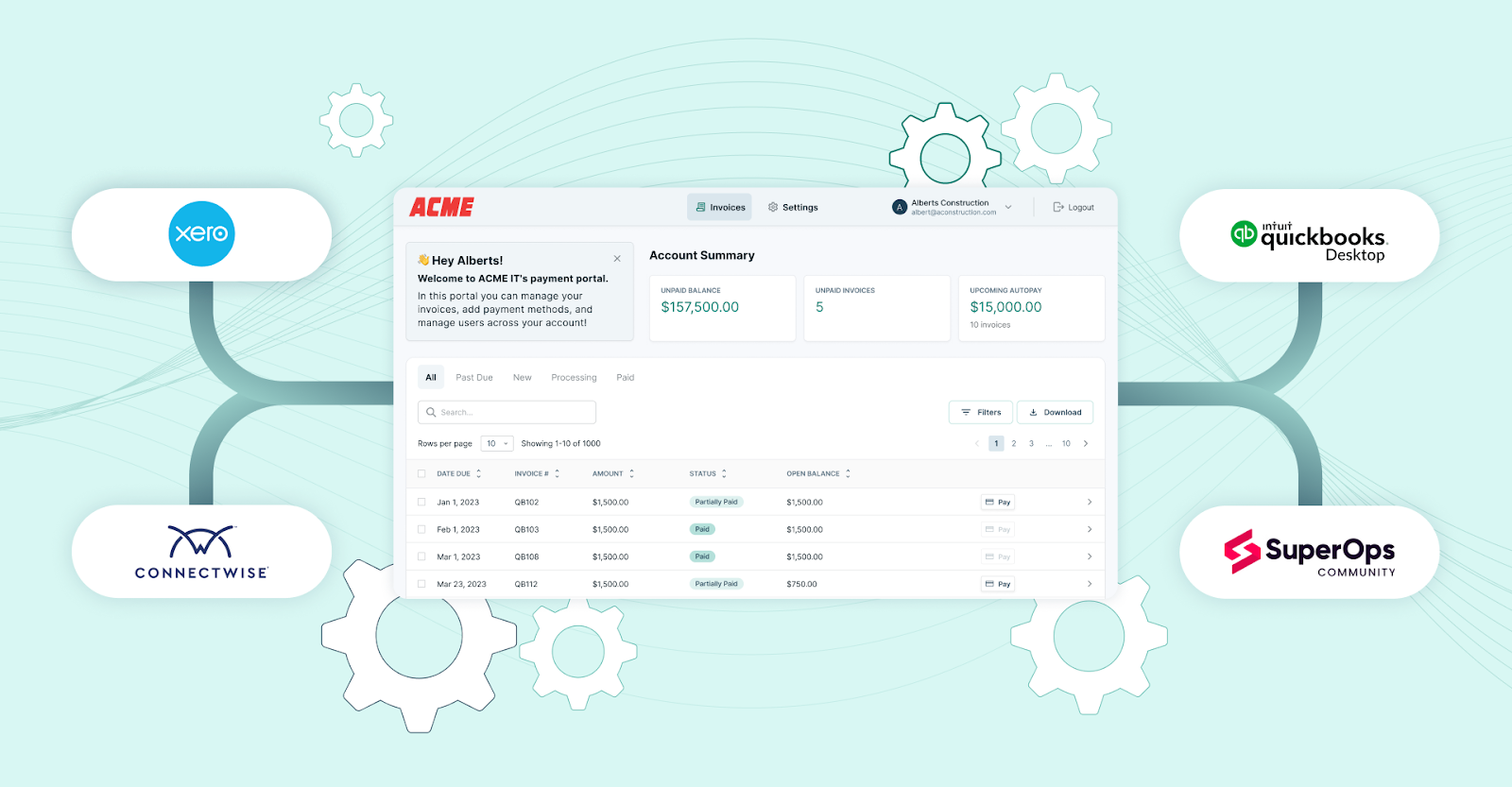
FlexPoint integrates with popular MSP tools, including ConnectWise PSA, Autotask, SuperOps, and HaloPSA, as well as accounting software such as QuickBooks Online/QuickBooks Desktop and Xero.
Every invoice and payment update in both the PSA and accounting systems is automatically processed. This bi-directional sync prevents those data mismatches that plague disconnected systems.
For example, when a client pays via FlexPoint, that payment is recorded in QuickBooks instantly. Then, the ticket in your PSA can be marked as paid.
Your financial data remains consistent across all systems, with no double-entry.
Instant Deposit Reconciliation:
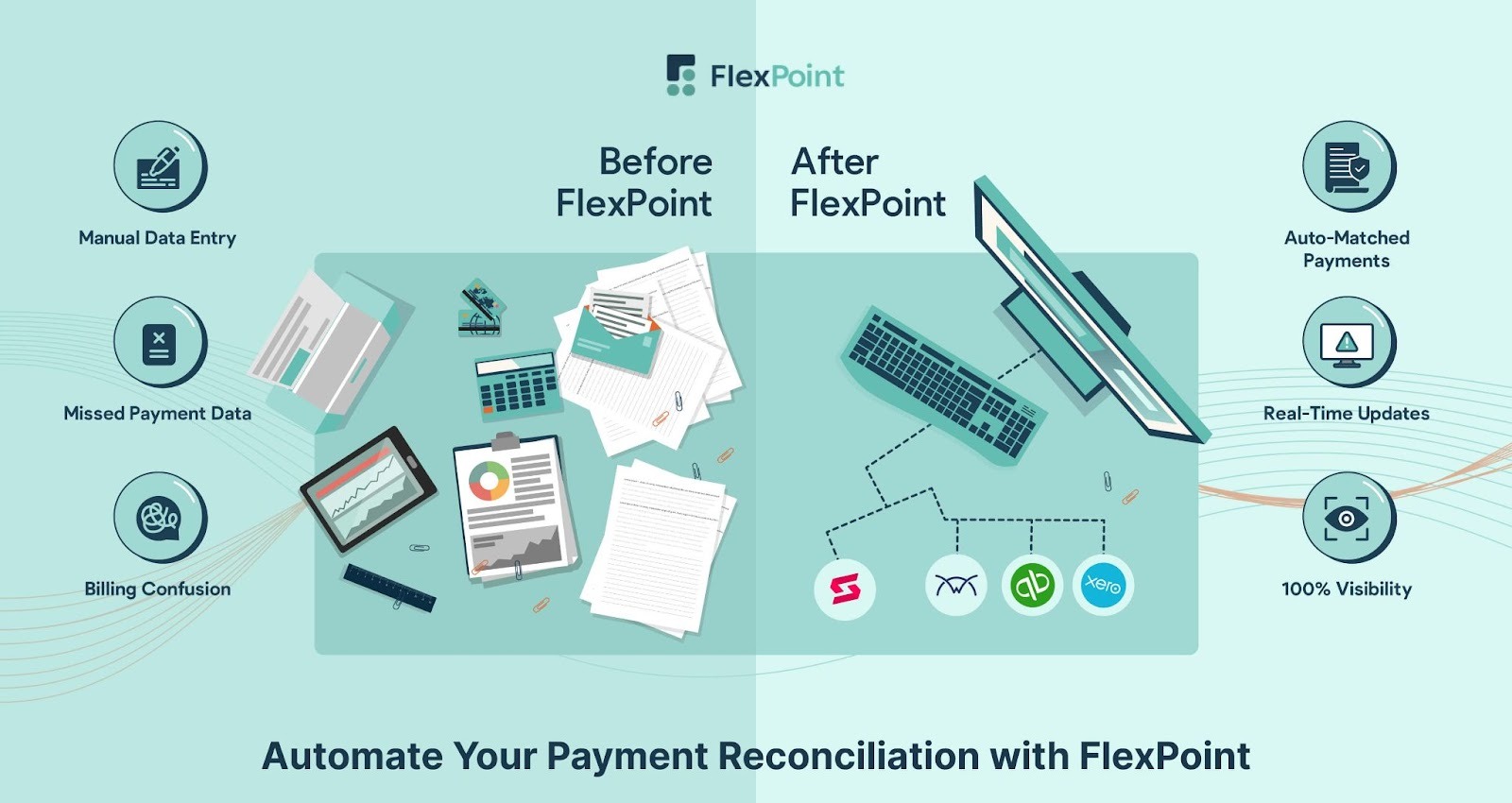
One of FlexPoint’s huge time-savers is automated reconciliation. The platform knows which invoices a payment belongs to. This way, FlexPoint can mark them paid and account for any processing fees or partial payments behind the scenes.
At any time, your deposit records match your invoice records without manual intervention.
This feature reduces what used to take hours of manual transaction matching to minutes.
Real-Time A/R and Cash Flow Visibility:
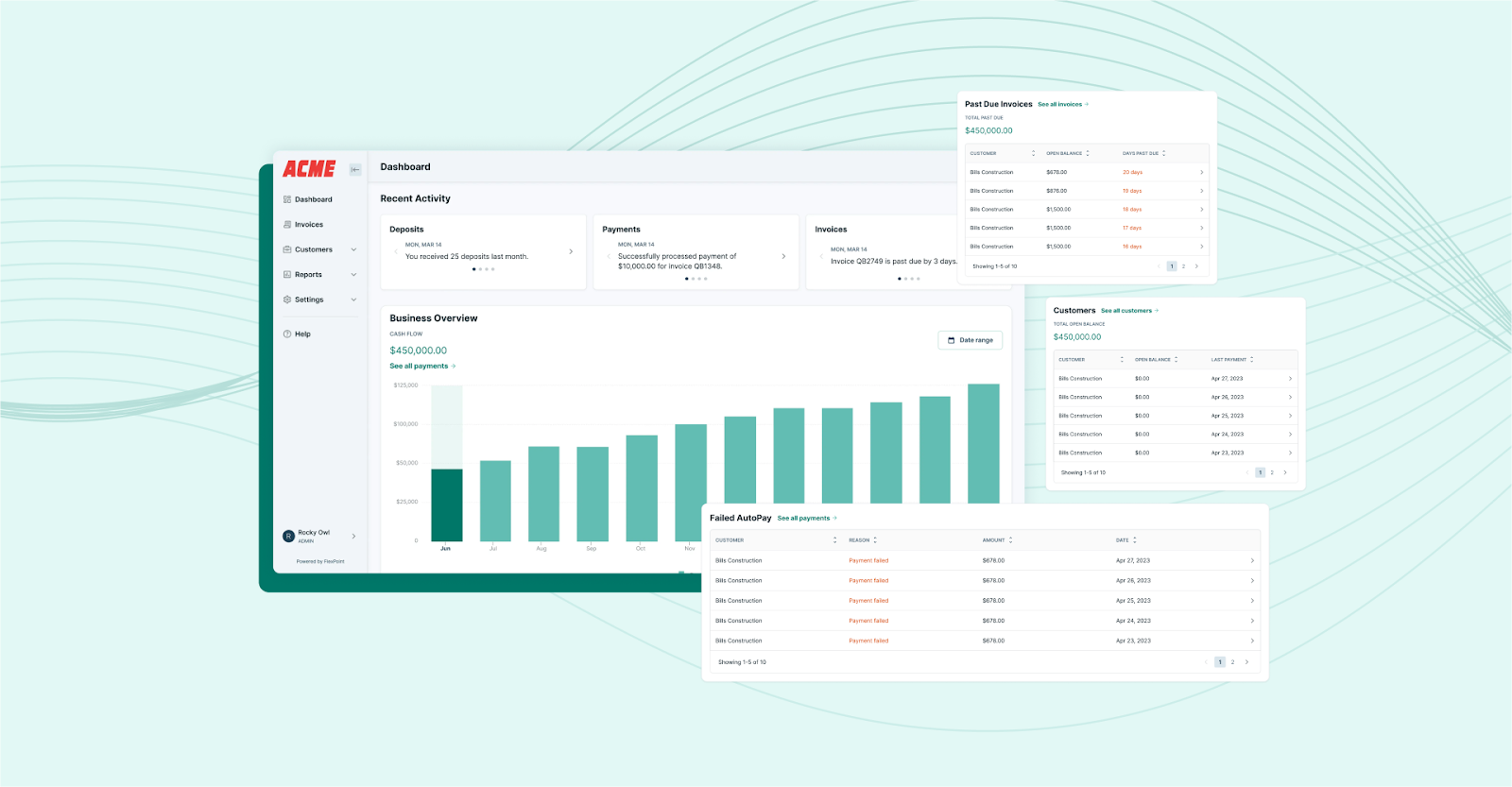
FlexPoint provides a live dashboard that shows key metrics, including:
- Total A/R
- Days sales outstanding (DSO)
- Cash collected this month
You can drill down into which invoices are open and how overdue they are.
Because FlexPoint processes invoices and payments in real time, the data is always up to date.
Both finance teams and MSP owners gain instant insight into the business's financial state. There’s no need to compile reports from multiple systems; FlexPoint’s analytics give a clear picture for better decision-making.
By covering all these areas, FlexPoint replaces six or seven disconnected tools and processes with a single, cohesive system tailored to MSP needs.
An MSP, Net-Tech, was able to start receiving client payments 20 days sooner on average after implementing FlexPoint’s AutoPay and payment portal.
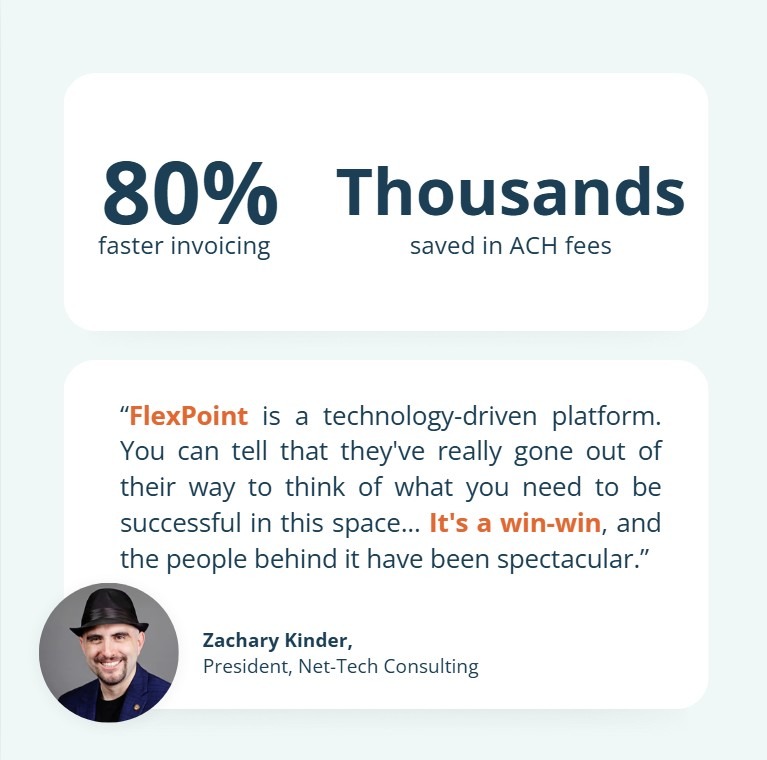
These results show real examples of how an MSP-specific solution can transform A/R operations.
FlexPoint not only helps MSPs get paid faster but also dramatically reduces the manual workload and errors associated with billing.
It’s a purpose-built platform that lets MSP finance teams operate with the efficiency and accuracy of a much larger enterprise.
Conclusion: A/R Automation Is No Longer Optional for Growing MSPs
Manual accounts receivable processes might work for a very small MSP. However, they quickly become a liability as you try to grow.
Chasing down late payments, fixing invoice errors, and struggling with cash-flow fluctuations will hold your business back. MSPs need their billing and payment collections to be efficient, predictable, and scalable.
Automation is essential for any MSP looking to maintain healthy finances and client satisfaction. By automating invoicing and collections, you ensure that the work you’ve completed turns into cash in the bank without unnecessary delays.
You also free your team from tedious tasks, allowing them to focus on serving clients and planning growth.
FlexPoint is the MSP-focused accounts receivable automation solution that enables this. The platform helps MSPs get paid faster, reduces manual billing workload, and provides real-time control over their financial operations.
With FlexPoint in place, you don’t have to worry about whether invoices went out or if a client “forgot” to pay this month; the system handles it and keeps you informed.
If you want to scale your MSP and maintain strong cash flow, automating your A/R is a smart and necessary step.
Ready to modernize your accounts receivable process?
Schedule a demo to see FlexPoint Accounts Receivable Automation in action.
Additional FAQs: Accounts Receivable Automation for MSPs
{{faq-section}}